Uncategorized
Complete Hellcat Engine Swap Parts Checklist
Aug
A Hellcat engine swap is not a project you figure out as you go. Every supporting system needs to be planned, sourced, and confirmed before the engine arrives. Missing one component on installation day means delays, additional shipping costs, and in some cases a partially assembled vehicle sitting idle while you wait for a part.
This checklist covers every component category involved in a Hellcat swap. Work through it before you order the engine. Use it again when the engine arrives to confirm everything is on hand before the install begins.
How to Use This Checklist
This list is organized by system. Each section covers what you need, why you need it, and what to confirm before purchasing. Not every item applies to every build. Some categories such as the transmission section depend entirely on your specific application. Read each section, mark what applies to your build, and confirm sourcing before moving forward.
Some items are universal across all Hellcat swaps. Others depend on your target chassis, your transmission choice, and your intended use. Those variables are noted where relevant.
Section 1: The Engine Package
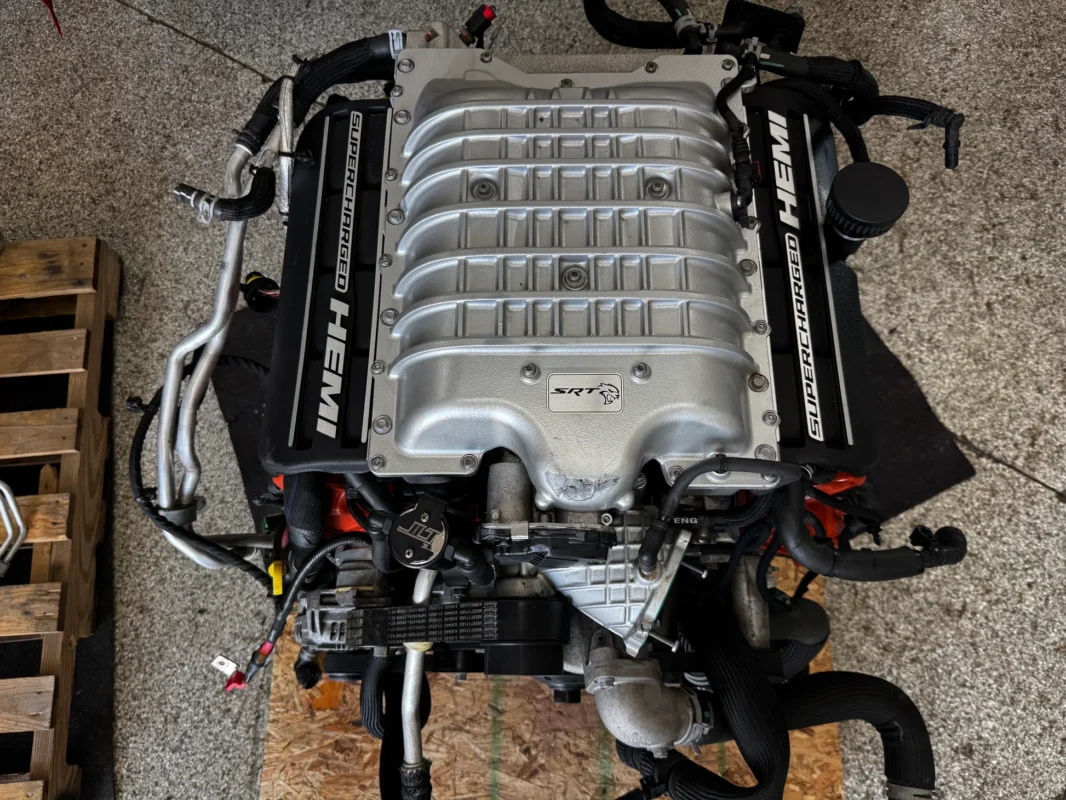
Before anything else, confirm exactly what comes with the engine you are buying. The engine package determines what you still need to source separately.
Confirm With Your Seller Before Purchasing
- Complete donor vehicle VIN provided
- Mileage verified from donor vehicle records
- Compression test performed and actual cylinder readings available
- Oil condition assessed and documented
- Supercharger shaft play checked and result documented
- Warranty terms confirmed in writing
Confirm What Is Included With the Engine
- Long block assembly: block, heads, valvetrain, timing components
- Supercharger assembly included or sourced separately
- Intake manifold included or sourced separately
- Fuel rails and injectors included or sourced separately
- Throttle body included or sourced separately
- Engine sensors: which ones are attached and which are missing
- Valve covers included
- Oil pan: confirm whether factory pan is included and whether it suits your chassis
- Accessory drive components: alternator, A/C compressor, power steering pump if applicable
- Engine wiring harness included or sourced separately
- ECU and PCM included or sourced separately
Note: A long block without the supercharger is a fundamentally different purchase from a complete engine. Confirm component inventory in writing before the engine ships.
Section 2: Engine Management and Electronics
The factory Hellcat PCM is VIN-locked to the original donor vehicle. This is one of the most critical planning decisions in any Hellcat swap.
For Direct Replacement in the Original Vehicle
- Factory PCM retained from original vehicle
- PCM reflash to recognize replacement engine confirmed with dealer or tuner
- Engine wiring harness from original vehicle confirmed functional
For Swap Into a Different Chassis
Choose one ECU solution and plan the wiring around it before ordering the engine.
Option A: Standalone Engine Management System
- Standalone ECU selected and ordered (Holley HP EFI, Holley Dominator, AEM Infinity, or equivalent)
- Swap-specific wiring harness for Hellcat application ordered
- Base calibration file sourced or tuner confirmed for startup tune
- Wideband oxygen sensor kit sourced if not included with ECU
Option B: Factory PCM with Anti-Theft Bypass
- Factory PCM sourced from same donor vehicle as engine
- Anti-theft bypass solution identified and sourced
- PCM programming confirmed with a shop experienced in Hellcat PCM work
Option C: Aftermarket PCM Reflash Solution
- Aftermarket reflash solution identified and confirmed compatible with your engine variant
- Shop experienced in this solution confirmed and scheduled
All Swap Applications
- Crankshaft position sensor present on engine or sourced
- Camshaft position sensors present or sourced
- Coolant temperature sensor present or sourced
- Oil pressure sensor present or sourced
- Knock sensors present or sourced
- Mass airflow sensor sourced and compatible with ECU solution
- Throttle position sensor present or sourced
- Manifold absolute pressure sensor present or sourced if applicable
- Oxygen sensors sourced and compatible with ECU solution
- Engine ground straps planned and sourced
Section 3: Motor Mounts
Motor mount selection must be confirmed before finalizing engine position. Engine position affects every other component in the swap including oil pan clearance, exhaust routing, and accessory drive layout.
Classic Mopar Platforms (A-body, B-body, E-body)
- Aftermarket Gen III HEMI motor mount kit identified for specific chassis
- Frame bracket bolt pattern confirmed for your specific chassis year
- Engine bracket bolt pattern confirmed for Gen III HEMI block
- Engine position confirmed for steering shaft clearance
- Engine position confirmed for firewall clearance
- Engine position confirmed for hood clearance with supercharger height
Non-Mopar Platforms
- Custom motor mount fabrication planned or fabricator confirmed
- Engine position established before fabrication begins
- Steering shaft clearance confirmed at planned engine position
- Firewall clearance confirmed at planned engine position
- All clearances re-confirmed with engine physically in the bay before welding mounts
All Platforms
- Motor mount hardware sourced (grade 8 bolts, washers, lock washers, nuts)
- Engine leveler or engine hoist confirmed available for installation
Section 4: Oil Pan and Oiling System
The factory Hellcat oil pan fits the factory Challenger and Charger chassis. In most swap applications it does not clear the target chassis frame rails, crossmember, or steering components.
- Oil pan clearance checked with factory pan before ordering a swap pan
- Swap-specific oil pan identified for your chassis and motor mount position
- Oil pan sump location confirmed to clear frame rails and crossmember
- Oil pan depth confirmed for ground clearance in your application
- Oil pan gasket sourced
- Oil pan drain plug and washer sourced
- Oil pickup tube confirmed compatible with swap pan
- Oil pickup tube O-ring or gasket sourced
- Correct engine oil volume for swap pan confirmed (may differ from factory spec)
- High-quality full synthetic oil sourced: 5W-20 factory spec or 5W-30 or 0W-40 for performance use
- Oil filter sourced
Section 5: Transmission and Bellhousing
The Hellcat uses a Gen III HEMI-specific bellhousing bolt pattern. Confirm transmission compatibility before ordering either the engine or the transmission.
Identify Your Transmission
- Transmission identified and confirmed for your application
- Transmission torque capacity confirmed adequate for Hellcat output (650 lb-ft minimum rating recommended)
Common Transmission Options
| Transmission | Notes |
|---|---|
| TorqueFlite 8HP90 | Factory Hellcat automatic, strongest direct option |
| Tremec TR-6060 | Factory Hellcat 6-speed manual |
| Tremec T56 | Common swap manual, requires bellhousing adapter |
| Tremec TKX | Compact 5-speed manual, requires bellhousing adapter |
| GM TH400 | Non-Mopar builds, requires bellhousing adapter |
| TorqueFlite 727 or 904 | Classic Mopar builds, requires bellhousing adapter |
Bellhousing and Adapter
- Bellhousing adapter identified if using a non-factory transmission
- Adapter confirmed compatible with your specific engine variant and transmission model
- Input shaft length confirmed compatible with adapter and transmission combination
- Adapter hardware sourced
Clutch and Flywheel (Manual Transmissions)
- Flywheel sourced and confirmed for Hellcat crankshaft flange and manual transmission
- Clutch disc spline count confirmed compatible with transmission input shaft
- Clutch pressure plate and disc rated for Hellcat torque output
- Throwout bearing sourced
- Clutch fork sourced if applicable
- Pilot bushing or bearing sourced
- Hydraulic clutch master cylinder and slave cylinder sourced if not carried over from original vehicle
Flexplate (Automatic Transmissions)
- Flexplate sourced and confirmed for Hellcat crankshaft flange and automatic transmission
- Flexplate bolt pattern confirmed for torque converter
- Torque converter sourced and rated for Hellcat output
Driveshaft
- Driveshaft length measured with engine and transmission in final position
- Driveshaft ordered to correct length, diameter, and end yoke specifications
- U-joints sourced if rebuilding existing driveshaft
- Driveshaft loop or safety loop sourced if required for your application
Section 6: Fuel System
The Hellcat runs a high-pressure returnless direct injection fuel system. This is one of the most commonly underestimated planning requirements in a Hellcat swap.
High-Pressure Side
- Cam-driven high-pressure fuel pump confirmed present on engine assembly
- High-pressure fuel rails and injectors confirmed present or sourced
- High-pressure fuel line from tank to engine sourced and rated for DI operating pressures
- High-pressure fuel line fittings confirmed compatible
Low-Pressure Supply Side
- In-tank fuel pump module confirmed compatible with DI system inlet requirements
- Fuel pump flow rate confirmed adequate for Hellcat fuel demand at full output
- Fuel tank confirmed compatible with pump module and fuel line routing
- Fuel filter sourced if applicable to your system configuration
- Fuel pressure regulator sourced if required for your configuration
Fuel Lines and Fittings
- Fuel supply line routed and confirmed clear of heat sources and moving components
- Fuel return line routed if applicable
- All fuel line fittings confirmed compatible and rated for operating pressures
- Fire-safe fuel line material confirmed for runs near exhaust components
Fuel Type
- Premium fuel supply planned: minimum 91 octane, 93 octane preferred
- Fuel system components confirmed compatible with ethanol content in your local fuel supply if applicable
Section 7: Main Engine Cooling System
The Hellcat requires a main cooling circuit capable of handling the thermal output of a supercharged 700-plus horsepower V8.
- Aluminum radiator sourced and confirmed adequate capacity for Hellcat heat rejection
- Radiator confirmed to fit your chassis with appropriate mounting provisions
- Upper and lower radiator hoses sourced and routed without sharp bends or contact with hot components
- Coolant overflow or degas tank sourced and mounted
- Electric cooling fan or mechanical fan solution confirmed and sourced
- Fan controller sourced if using electric fans
- Fan shroud sourced or fabricated to direct airflow through radiator core
- Thermostat sourced at correct temperature rating for Hellcat application
- Thermostat housing sourced or confirmed present on engine
- Water pump confirmed present on engine or sourced
- Coolant sourced: OAT or HOAT per factory specification for your model year
- Coolant bleed procedure identified before filling system
Section 8: Supercharger Intercooler Cooling Circuit
This is the cooling system component most often overlooked in Hellcat swap planning. The intercooler circuit is entirely separate from the main engine cooling circuit and requires its own components.
- Intercooler heat exchanger sourced and mounting location identified at front of vehicle
- Heat exchanger mounting position confirmed to receive adequate airflow
- Heat exchanger confirmed to fit in available front-end space alongside main radiator
- Intercooler coolant pump sourced and rated for Hellcat application
- Intercooler coolant reservoir sourced and mounting location identified
- Intercooler supply and return hoses routed and sourced
- Intercooler hose fittings confirmed compatible
- Intercooler circuit coolant sourced
- Intercooler circuit bleed procedure identified before running engine under load
- Intercooler pump power supply wired to engine run circuit so pump operates whenever engine runs
Critical note: The intercooler circuit must be fully functional and fully bled before the engine runs under boost. Without intercooler coolant circulation, intake air temperatures climb rapidly under boost and detonation risk increases significantly.
Section 9: Exhaust System
The factory Hellcat exhaust manifolds fit the factory Challenger and Charger chassis. Most swap applications require different exhaust manifolds or headers.
- Exhaust manifold or header option identified for your chassis and motor mount position
- Header tube routing confirmed clear of steering components, frame rails, and floor
- Header flange pattern confirmed for Gen III HEMI cylinder head bolt pattern
- Collector size and location confirmed for your downstream exhaust routing
- Downpipes or mid-pipes sourced
- Catalytic converters sourced if required for your application
- Mufflers sourced
- Exhaust hangers and isolators sourced
- Oxygen sensor bungs confirmed in correct locations for your ECU solution
- Exhaust system thermal clearance confirmed from floor, fuel lines, and brake lines
Section 10: Accessory Drive
The factory Hellcat accessory drive suits the factory Challenger and Charger engine bay. Swap applications typically require a modified or custom accessory drive layout.
- Alternator confirmed present or sourced, confirmed compatible with your charging system requirements
- Alternator output confirmed adequate for your electrical loads including intercooler pump
- Power steering solution identified: factory hydraulic pump, electric power steering conversion, or fixed ratio
- Air conditioning: confirm whether you are retaining A/C and source compatible compressor and bracket if so
- Accessory drive belt routing confirmed with all pulleys in final position
- Belt tensioner confirmed functional or sourced
- Idler pulleys confirmed functional or sourced
- Accessory drive belt sourced to correct length for your configuration
- Supercharger drive belt sourced
- Supercharger belt tensioner confirmed functional
Section 11: Intake and Air Induction
- Air intake system sourced and routed from filter to supercharger inlet
- Cold air intake or air box sourced and positioned away from heat sources
- Air filter sourced and confirmed correct for intake system
- Intake tube confirmed sealed with no air leaks between filter and supercharger inlet
- Mass airflow sensor mounting location confirmed and compatible with ECU solution
- Intake tube routing confirmed clear of moving components and heat sources
- Supercharger inlet confirmed free of debris before first startup
Section 12: Ignition System
- Coil-on-plug ignition coils confirmed present on engine or sourced
- Spark plugs sourced at correct heat range for your application
- Spark plug gap confirmed to factory specification before installation
- Coil wiring confirmed connected and routed away from heat and moving components
- Ignition timing base setting identified for your specific build combination before first startup
Section 13: Engine Bay Preparation
Before the engine goes in, the engine bay needs to be ready.
- Engine bay cleaned and inspected for rust, damage, or components needing repair
- Firewall grommets identified for all new wiring and line pass-throughs
- Existing wiring that will not be used removed or secured away from heat and moving components
- Engine bay ground points identified and prepared
- Battery and battery cables confirmed adequate for Hellcat starter current demands
- Battery location confirmed and cable routing planned
- Fuse and relay panel location identified for engine management system
Section 14: Chassis and Drivetrain Supporting Components
- Rear differential confirmed adequate for Hellcat torque output
- Rear axle shafts confirmed adequate for your power level if applicable
- Rear suspension confirmed adequate for increased torque and weight
- Brake system confirmed adequate for the vehicle’s increased performance capability
- Brake booster vacuum source identified if your application uses vacuum-assisted brakes (Hellcat does not produce significant vacuum, so an electric vacuum pump or hydroboost system may be required)
- Engine and transmission crossmember or mount confirmed for new drivetrain combination
Section 15: Fluids and Consumables
Fluids are the most commonly forgotten category until installation day.
- Engine oil: full synthetic, correct viscosity, adequate quantity for your oil pan volume
- Oil filter
- Coolant: correct specification and adequate quantity for main circuit
- Intercooler coolant: correct specification and adequate quantity for intercooler circuit
- Transmission fluid: correct specification for your transmission
- Differential fluid if applicable
- Power steering fluid if retaining hydraulic steering
- Brake fluid if brake system was opened during installation
- Threadlocker for critical fasteners
- RTV sealant if applicable to your gasket configuration
- Anti-seize for spark plugs
- Assembly lube for bearing surfaces during installation
Section 16: Tools and Equipment for Installation Day
- Engine hoist with adequate capacity for Hellcat engine weight (approximately 550 to 580 lbs with supercharger)
- Engine leveler for precise angle control during installation
- Transmission jack
- Torque wrench set covering required torque ranges
- Socket set including specialty sizes for Hellcat fasteners
- Breaker bar
- Compression tester if performing pre-installation compression check
- Scan tool capable of communicating with your ECU solution
- Multimeter for wiring verification
- Timing light if using a distributor-based ignition solution
- Fuel pressure gauge for verifying fuel system pressure at startup
- Coolant pressure tester for leak checking before first startup
- Fire extinguisher accessible during first startup
Section 17: First Startup Checklist
Before the first startup, confirm each of the following.
- All coolant lines connected and clamped
- Main cooling system filled and bled
- Intercooler circuit filled and bled
- All fuel connections made and pressure tested before cranking
- All electrical connections confirmed and secured
- No tools or loose components remaining in engine bay
- Supercharger inlet clear of all debris and securely connected
- Oil filled to correct level
- Oil pressure confirmed by cranking engine with ignition disabled until oil pressure registers before first fire
- Ignition timing base set per specification for your build
- Fuel pressure confirmed at specification with key on engine off
- Fire extinguisher accessible
- First startup performed with someone watching for leaks while another person monitors gauges
Section 18: Post-Startup and Break-In
- Check all fluid levels immediately after first startup
- Check for coolant, oil, and fuel leaks at operating temperature
- Confirm intercooler pump is operating at operating temperature
- Monitor coolant temperature for correct warm-up rate and stable operating temperature
- Monitor oil pressure at idle and at operating RPM
- Allow break-in period before sustained hard use: 500 miles minimum of varied RPM driving without extended full-throttle runs
- First oil change at 500 miles to remove initial wear debris
- Professional tune scheduled before sustained hard use
Where to Source a Verified Hellcat Engine
A complete checklist is only as useful as the engine it is built around. At McClain Auto Part, we carry verified low-mileage 6.2L Hellcat engines with compression testing performed on all eight cylinders, oil condition assessed, supercharger shaft play checked, and mileage verified from donor vehicle records before the engine ships. Every unit comes with a 6-month warranty against internal mechanical defects and ships on a secured freight pallet from our Cleveland, Ohio warehouse.
Call us at +1(216) 230-5433 or email sales@mcclainautopart.com with your application details and we confirm the engine variant, included components, compatibility, and current availability before you commit to anything.
