383 Stroker Crate Engine for Sale | 518 HP Chevy Small Block V8
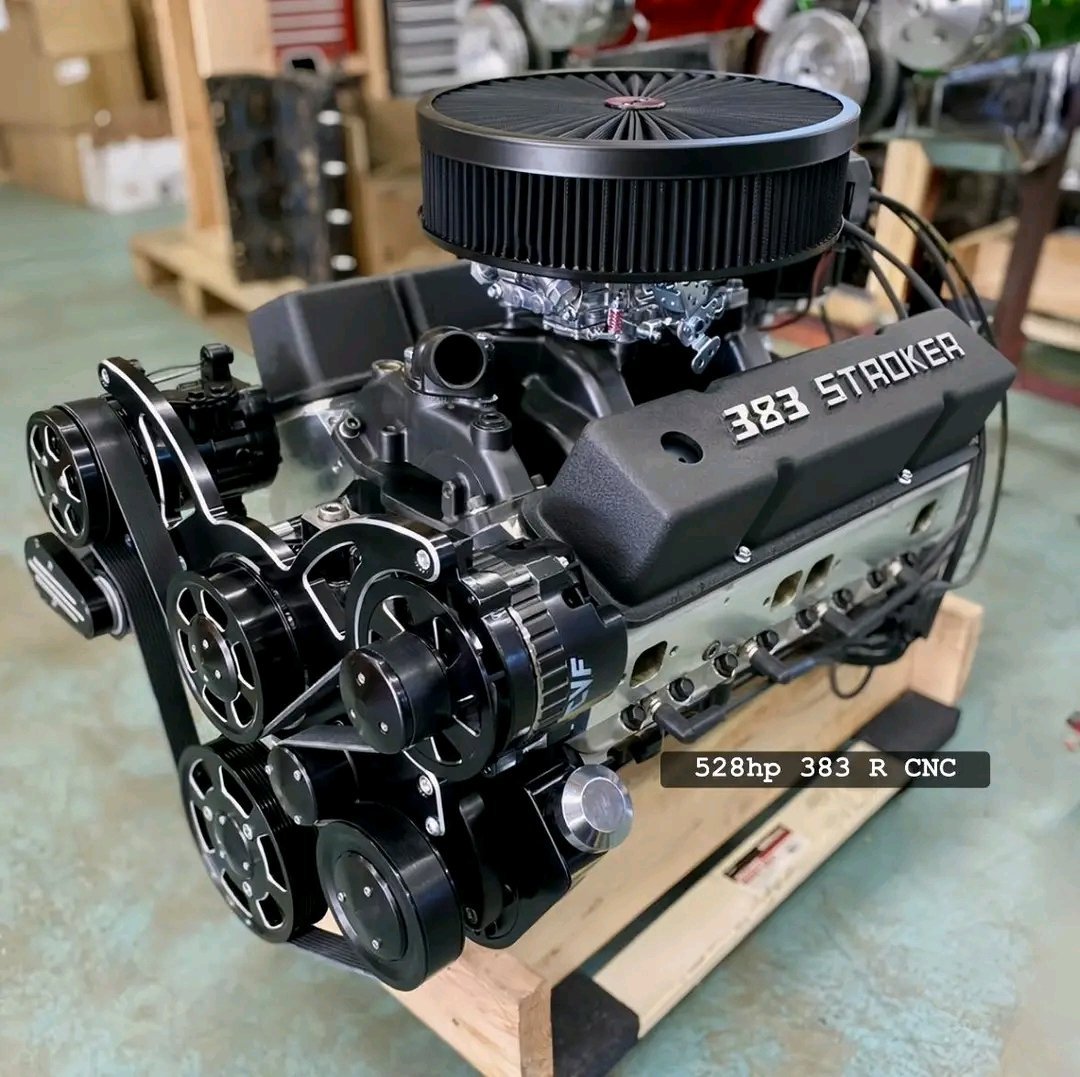
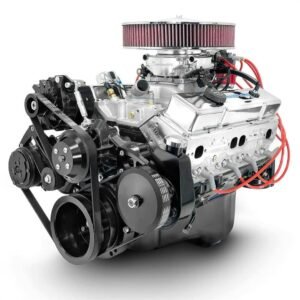
Looking for a 383 stroker crate engine for sale? McClain Auto Part offers an assembled Chevy small-block V8 with an advertised output of 518 horsepower. This performance engine features a forged rotating assembly, hydraulic roller camshaft, aluminum cylinder heads, and four-barrel carburetor.
The 383 stroker is a popular choice for classic Camaros, Chevelles, C10 trucks, hot rods, and restomod projects. Its increased displacement provides strong performance potential while maintaining the familiar small-block Chevrolet design.
Additionally, the engine includes several major components needed for a performance build. As a result, buyers can avoid sourcing and assembling a complete long block from individual parts.
We offer nationwide freight shipping from Cleveland, Ohio. Every qualifying purchase also includes an advertised six-month limited warranty.
Sale Price: $4,000
The 518 HP figure represents the advertised build rating. Individual dynamometer testing has not been confirmed for this unit. Therefore, we recommend reviewing the exact specifications before purchasing.
383 Stroker Crate Engine – Key Features
Our 383 stroker combines traditional Chevrolet small-block architecture with performance-focused components.
Key features include:
383 cubic-inch Chevy small-block V8
Advertised 518 horsepower
Forged-steel crankshaft and connecting rods
Hydraulic roller camshaft
Aluminum performance cylinder heads
Four-barrel carburetor
Performance intake manifold
HEI-style distributor
Advertised compression ratio of 10.5:1–11.0:1
Assembled performance engine package
Six-month limited warranty
Nationwide freight shipping
Together, these components create a foundation for a higher-output Chevrolet V8. However, the exact piston material, camshaft profile, and cylinder-head specifications depend on the supplied build.
What Is a 383 Stroker Engine?
A 383 stroker is a modified version of the traditional Chevrolet 350 small-block engine.
The standard 350 uses a 3.48-inch crankshaft stroke. In comparison, a conventional 383 uses a 3.75-inch stroke and a 4.030-inch cylinder bore.
These modifications increase displacement to approximately 383 cubic inches.
Because the engine moves more air through its larger displacement, it can produce additional torque when builders select suitable supporting components.
Moreover, the traditional SBC design offers extensive aftermarket support. Owners can find compatible intake manifolds, cylinder heads, camshafts, and other performance parts.
Why Choose a 383 Instead of a 350?
The 383 offers greater displacement than a conventional 350.
As a result, builders can develop additional torque without switching to a completely different engine platform.
Nevertheless, displacement alone does not determine horsepower. Camshaft selection, compression, airflow, exhaust design, and tuning also affect performance.
For many classic Chevrolet projects, the 383 provides a practical combination of traditional design and increased performance potential.
Chevy 383 Stroker Engine Specifications
| Specification | Details |
|---|---|
| Engine type | Chevrolet small-block V8 |
| Displacement | 383 cubic inches / approximately 6.3L |
| Horsepower | 518 HP advertised |
| Torque | 490–510 lb-ft advertised estimate |
| Block material | Cast iron |
| Crankshaft | Forged steel |
| Advertised stroke | 3.75 inches |
| Connecting rods | Forged steel |
| Pistons | Forged or hypereutectic; confirm |
| Camshaft | Hydraulic roller |
| Cylinder heads | Aluminum performance |
| Compression ratio | Approximately 10.5:1–11.0:1 |
| Induction | Four-barrel carburetor |
| Ignition | HEI-style distributor |
| Engine condition | Advertised new assembled crate engine |
| Warranty | Six months |
| Shipping location | Cleveland, Ohio |
These figures describe the advertised configuration. Before ordering, confirm the actual build sheet and included components.
Performance Features of Our 383 Stroker
Several components contribute to the 383’s performance potential.
Each plays an important role in engine operation, reliability, and power delivery.
Forged Crankshaft and Connecting Rods
The advertised rotating assembly includes a forged-steel crankshaft and forged-steel connecting rods.
These components provide a foundation for a performance-oriented engine.
In addition, the longer crankshaft stroke increases displacement compared with a standard 350.
However, strong components alone cannot guarantee engine durability. Correct balancing, machining, clearances, and assembly are equally important.
Therefore, buyers should confirm the rotating assembly specifications for the available engine.
Hydraulic Roller Camshaft
Our advertised build uses a hydraulic roller camshaft.
Unlike a traditional flat-tappet design, roller lifters reduce sliding friction between the camshaft and lifters.
Furthermore, hydraulic roller systems support a wide range of performance camshaft profiles.
The exact camshaft influences idle quality, throttle response, and operating RPM.
For example, an aggressive profile may favor higher-RPM horsepower. A milder configuration can provide smoother low-speed operation.
Consequently, we recommend confirming the camshaft’s lift, duration, and lobe separation before purchasing.
Aluminum Performance Cylinder Heads
The engine includes aluminum performance cylinder heads.
Cylinder heads influence how efficiently an engine moves air through its intake and exhaust ports.
When properly matched with the camshaft and intake manifold, they can support substantial horsepower.
Additionally, aluminum heads generally weigh less than comparable cast-iron designs.
However, airflow depends on the actual cylinder-head specifications.
For this reason, buyers should confirm the manufacturer, casting number, valve sizes, and combustion chamber volume.
Four-Barrel Carburetor
This 383 stroker uses a traditional four-barrel carburetor.
Carbureted induction suits many classic Chevrolet builds because it does not require a modern electronic fuel-injection controller.
Nevertheless, proper carburetor calibration remains essential.
The carburetor must provide suitable airflow and fuel delivery for the engine’s requirements.
Therefore, confirm its manufacturer, CFM rating, and fuel-pressure specifications before installation.
What Comes With the 383 Stroker Engine?
The advertised package includes a substantially assembled Chevrolet small-block performance engine.
Included Components
Complete 383 stroker long block
Aluminum performance cylinder heads
Performance intake manifold
Four-barrel carburetor
Valve covers
Timing cover
Harmonic balancer
HEI-style distributor
Water pump
Together, these components provide much of the engine assembly.
However, the package may not include every part necessary to install and operate the engine in your vehicle.
Additional Parts You May Need
Depending on your application, you may need a starter, alternator, fuel pump, ignition wires, flywheel, or flexplate.
Likewise, some vehicles require different engine mounts, exhaust components, or cooling-system parts.
Before ordering, confirm exactly which accessories come with the engine.
This simple check can help prevent installation delays and unexpected expenses.
What Vehicles Can Use a 383 Stroker?
The traditional 383 small-block is a popular choice for classic Chevrolet vehicles and custom builds.
Common applications include:
Chevrolet Camaro
Chevrolet Chevelle
Chevrolet Nova
Chevrolet El Camino
Chevrolet C10
Square-body Chevrolet and GMC trucks
1955–1957 Chevrolet models
Hot rods and restomods
However, these vehicles do not share identical installation requirements.
Engine mounts, oil pans, transmission hardware, and accessory clearance can vary.
Chevrolet Camaro and Chevelle
Classic Camaros and Chevelles offer popular platforms for small-block performance upgrades.
A 383 can provide additional displacement while maintaining traditional SBC architecture.
However, a higher-output engine may require drivetrain, cooling, and fuel-system upgrades.
Therefore, confirm the complete installation requirements before purchasing.
Chevrolet C10 and Square-Body Trucks
Many C10 and square-body projects use traditional Chevrolet small-block engines.
The 383 offers a familiar platform for owners seeking additional performance potential.
Furthermore, aftermarket suppliers offer numerous components for these vehicles.
Even so, oil pan clearance, engine mounts, and exhaust routing require attention.
Hot Rods and Restomods
Custom vehicles often provide more flexibility when selecting an engine.
A carbureted 383 can suit projects built around a traditional Chevrolet V8.
However, custom installations may still require fabrication.
For the best results, review the chassis, transmission, cooling system, and accessory arrangement before ordering.
Which Transmissions Work With a 383 Stroker?
The traditional Chevrolet small-block engine can work with several manual and automatic transmissions.
However, the correct installation requires more than matching the bellhousing bolt pattern.
For example, the engine’s balance arrangement and crankshaft configuration affect flywheel and flexplate selection.
Common Transmission Options
| Transmission | Application |
|---|---|
| TH350 | Traditional street automatic |
| TH400 | Heavy-duty automatic |
| 700R4 | Automatic with overdrive |
| 4L60E | Electronic automatic |
| 4L80E | Heavy-duty electronic automatic |
| Tremec TKX | Performance manual |
| Tremec T56 | Six-speed manual conversion |
| Muncie four-speed | Classic manual application |
Each transmission has different torque limits and installation requirements.
Therefore, confirm the transmission’s condition, torque capacity, and compatible hardware.
Internal vs. External Engine Balance
Some 383 stroker engines use internal balancing. Others require external balance components.
As a result, the correct flywheel or flexplate depends on the engine’s actual specifications.
Using mismatched components can cause vibration and mechanical damage.
Before ordering transmission hardware, confirm the engine balance and rear main seal configuration.
Is the 518 HP 383 Stroker Good for Street Driving?
A performance 383 can work well in a street-driven vehicle when builders select suitable supporting components.
However, the horsepower rating alone does not establish drivability.
Camshaft specifications, compression, ignition timing, gearing, and carburetor calibration all influence performance.
Idle Quality and Camshaft Selection
A hydraulic roller camshaft can support different driving characteristics.
For example, a larger camshaft may produce a noticeable idle lope. It can also reduce vacuum at lower engine speeds.
Consequently, the exact camshaft specification matters when comfort and everyday driving are priorities.
Compression and Fuel Requirements
The advertised compression ratio ranges from approximately 10.5:1 to 11.0:1.
Therefore, fuel selection deserves special attention.
The required octane depends on the engine’s configuration and ignition calibration.
Before operating the engine, confirm the builder’s recommended fuel grade.
Cooling System
A high-output V8 needs an effective cooling system.
For that reason, inspect the radiator, fans, hoses, and water pump before installation.
Additionally, ensure the vehicle provides adequate airflow during low-speed operation.
Proper cooling helps prevent overheating and related engine damage.
Carburetor and Fuel System Requirements
This engine uses a four-barrel carburetor rather than electronic fuel injection.
Therefore, the fuel pump must deliver the correct pressure and volume.
Many traditional performance carburetors operate at relatively low fuel pressure.
However, the exact requirements depend on the carburetor model.
Before startup, inspect the fuel lines, regulator, filtration, and pump.
Also, confirm that the carburetor matches the engine’s airflow requirements.
Correct fuel delivery supports performance and helps prevent operating problems.
Engine Startup and Break-In
A newly assembled performance engine requires proper preparation.
Although hydraulic roller camshafts have different break-in requirements from flat-tappet designs, the complete engine still needs careful initial operation.
Before the First Startup
Check engine oil, coolant, fuel delivery, and ignition timing.
Next, follow the engine builder’s oil-system priming instructions.
Then, inspect all electrical connections, cooling hoses, and installed accessories.
A qualified installer should also verify the recommended spark plugs and fuel requirements.
During Initial Operation
Monitor oil pressure and coolant temperature closely.
In addition, inspect the engine for leaks or unusual operating conditions.
Follow the builder’s specified break-in procedure.
Because internal components and assembly methods vary, a universal break-in schedule may not suit every engine.
Therefore, always use the instructions provided for the actual build.
What to Check Before Purchasing
A performance engine represents a significant investment.
Before buying, review more than the advertised horsepower.
Confirm the Engine Build
Start with the crankshaft, connecting rods, pistons, cylinder heads, and camshaft specifications.
Next, confirm the engine’s compression ratio and balancing arrangement.
These details help establish whether the combination suits your project.
Review the Horsepower Rating
The listing advertises 518 horsepower.
However, individual dyno testing has not been established for this specific unit.
Ask whether the rating comes from a previous tested combination, a builder estimate, or an actual dynamometer report.
Confirm the Included Accessories
Review the supplied carburetor, distributor, water pump, and other components.
Also, check which installation parts you must purchase separately.
Check Your Vehicle Compatibility
Finally, confirm engine mounts, transmission hardware, cooling-system capacity, and available clearance.
Taking these steps before purchasing can make the installation process more predictable.
Nationwide Engine Shipping
McClain Auto Part offers freight delivery throughout the United States.
We ship from Cleveland, Ohio, using suitable freight arrangements for heavy engine assemblies.
Processing and Delivery
Our advertised processing period is generally three to five business days after order confirmation.
After dispatch, we provide tracking information.
However, freight transit time depends on the destination and carrier.
Shipping Quotes
Shipping costs vary by ZIP code and delivery requirements.
For example, residential delivery or liftgate service may affect the rate.
Therefore, provide your delivery details when requesting a quote.
Local pickup may also be available in Cleveland by prior arrangement.
Six-Month Limited Warranty
Our 383 stroker crate engine includes an advertised six-month limited warranty.
The warranty addresses qualifying defects involving supplied engine components or assembly.
However, coverage depends on the written policy and applicable conditions.
Proper installation, fuel delivery, lubrication, ignition timing, and cooling remain essential.
For example, unsuitable fuel pressure or incorrect ignition timing can damage an engine.
Therefore, review the warranty terms and installation requirements before purchasing.
Why Choose McClain Auto Part?
At McClain Auto Part, we understand that purchasing a crate engine involves more than comparing horsepower ratings.
The engine must also match your vehicle, transmission, and performance goals.
For that reason, we encourage buyers to review the complete build specifications before ordering.
Our team can help clarify the advertised components, available documentation, warranty information, and shipping arrangements.
Additionally, we offer nationwide delivery from Cleveland, Ohio.
Whether you’re restoring a classic Camaro or upgrading a C10, we want you to understand the engine package before completing your purchase.
Frequently Asked Questions
How Much Horsepower Does This 383 Stroker Have?
The engine carries an advertised rating of 518 horsepower. However, individual dyno testing has not been confirmed.
Is the Engine Fully Assembled?
The listing describes an assembled carbureted engine package. Nevertheless, some vehicle-specific installation components may be necessary.
Does It Have a Forged Crankshaft?
Yes, the advertised specifications identify a forged-steel crankshaft. Confirm the actual manufacturer and part number before ordering.
Is This Engine Carbureted?
Yes. The engine uses a four-barrel carburetor with a performance intake manifold.
Will It Fit My Camaro or C10?
It may fit a compatible traditional SBC application. However, engine mounts, transmission hardware, oil pan clearance, and accessories require verification.
What Transmission Works Best?
Common options include the TH350, TH400, 700R4, and compatible manual transmissions. The best choice depends on your driving requirements and the transmission’s torque capacity.
Does the Engine Require Premium Fuel?
Fuel requirements depend on the exact compression ratio, camshaft, and ignition calibration. Therefore, confirm the builder’s recommended octane before operation.
Is This Engine Dyno Tested?
Individual dyno testing has not been confirmed. Ask about available performance documentation.
Does the Engine Need a Break-In Period?
Yes, a newly assembled engine requires appropriate startup and break-in procedures. Follow the supplied builder instructions.
Does It Come With a Warranty?
The listing includes an advertised six-month limited warranty. Review the complete terms before ordering.
Do You Ship Nationwide?
Yes. McClain Auto Part offers nationwide freight shipping from Cleveland, Ohio.
Order Your 383 Stroker Crate Engine Today
If you’re searching for a 383 stroker crate engine for sale, McClain Auto Part offers an assembled Chevy small-block V8 with an advertised 518 HP output.
The engine combines increased displacement with a forged rotating assembly, hydraulic roller camshaft, aluminum performance heads, and carbureted induction.
Before purchasing, confirm the build specifications, included components, and installation requirements.
Our team can also help review warranty details and freight arrangements.
Sale Price: $4,000
Be the first to review “383 stroker crate engine for sale”
You must be logged in to post a review.
Related products
Coyote
GODZILLA
Mercury Marauders
Reviews
There are no reviews yet.