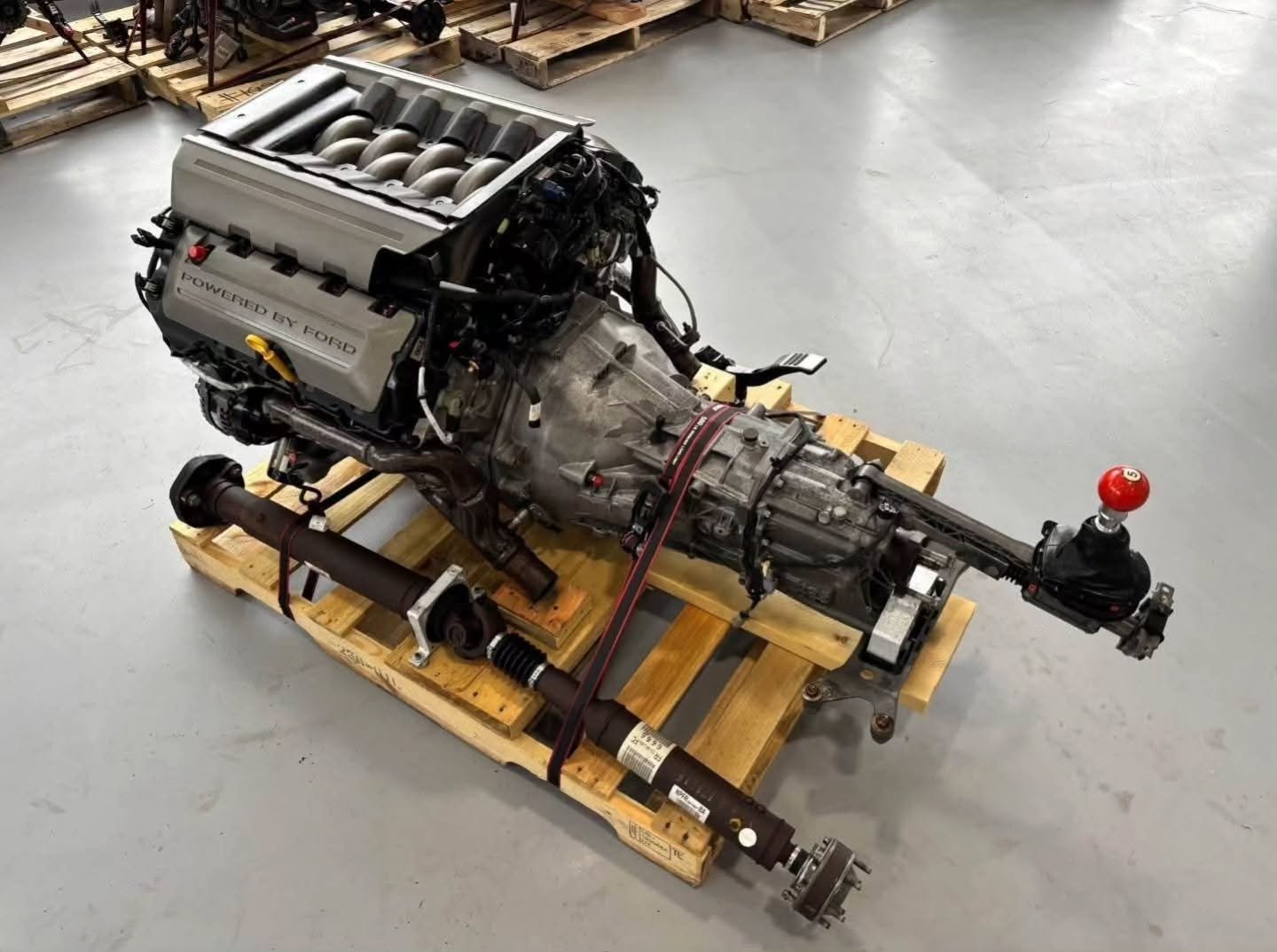
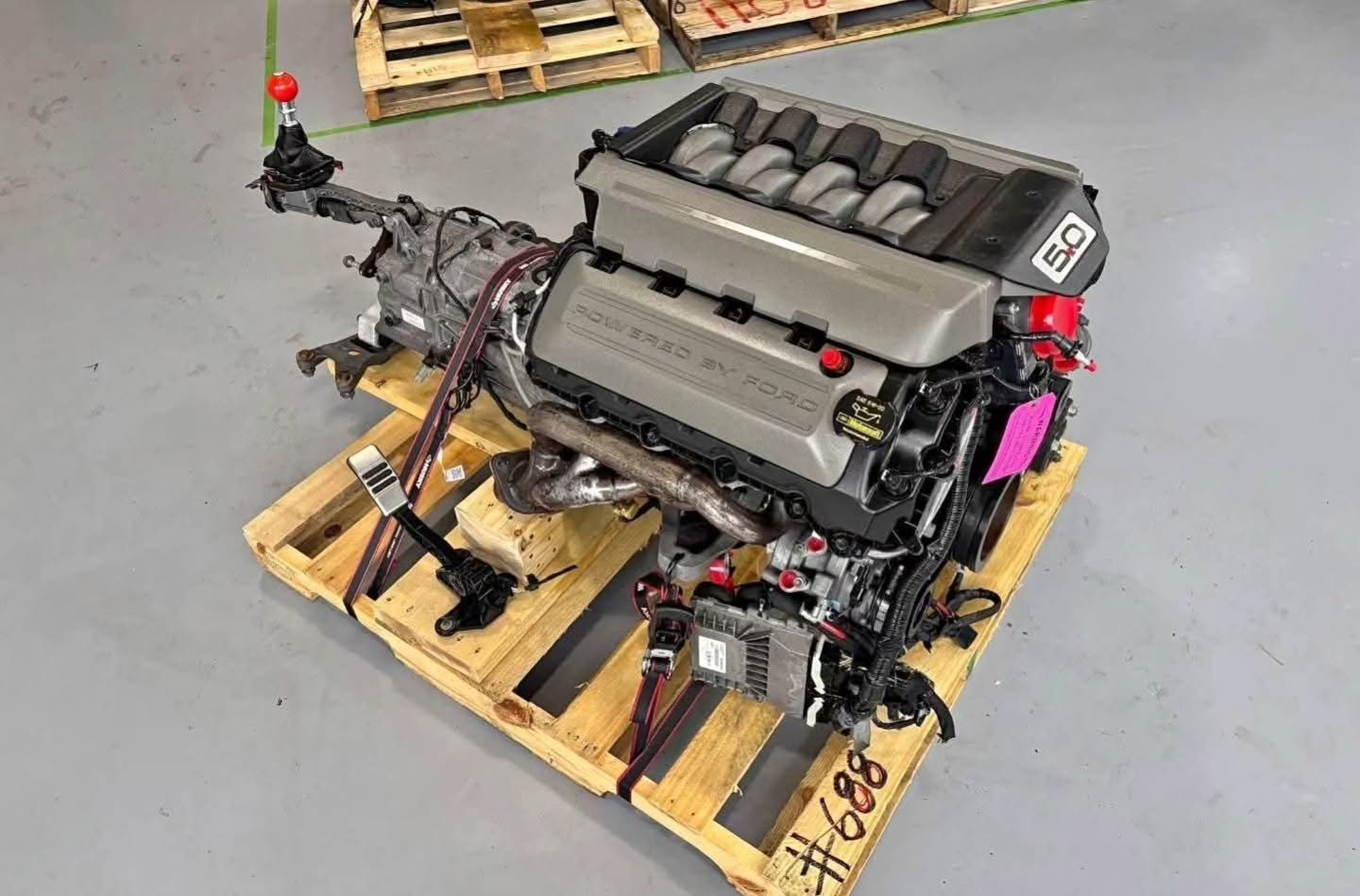
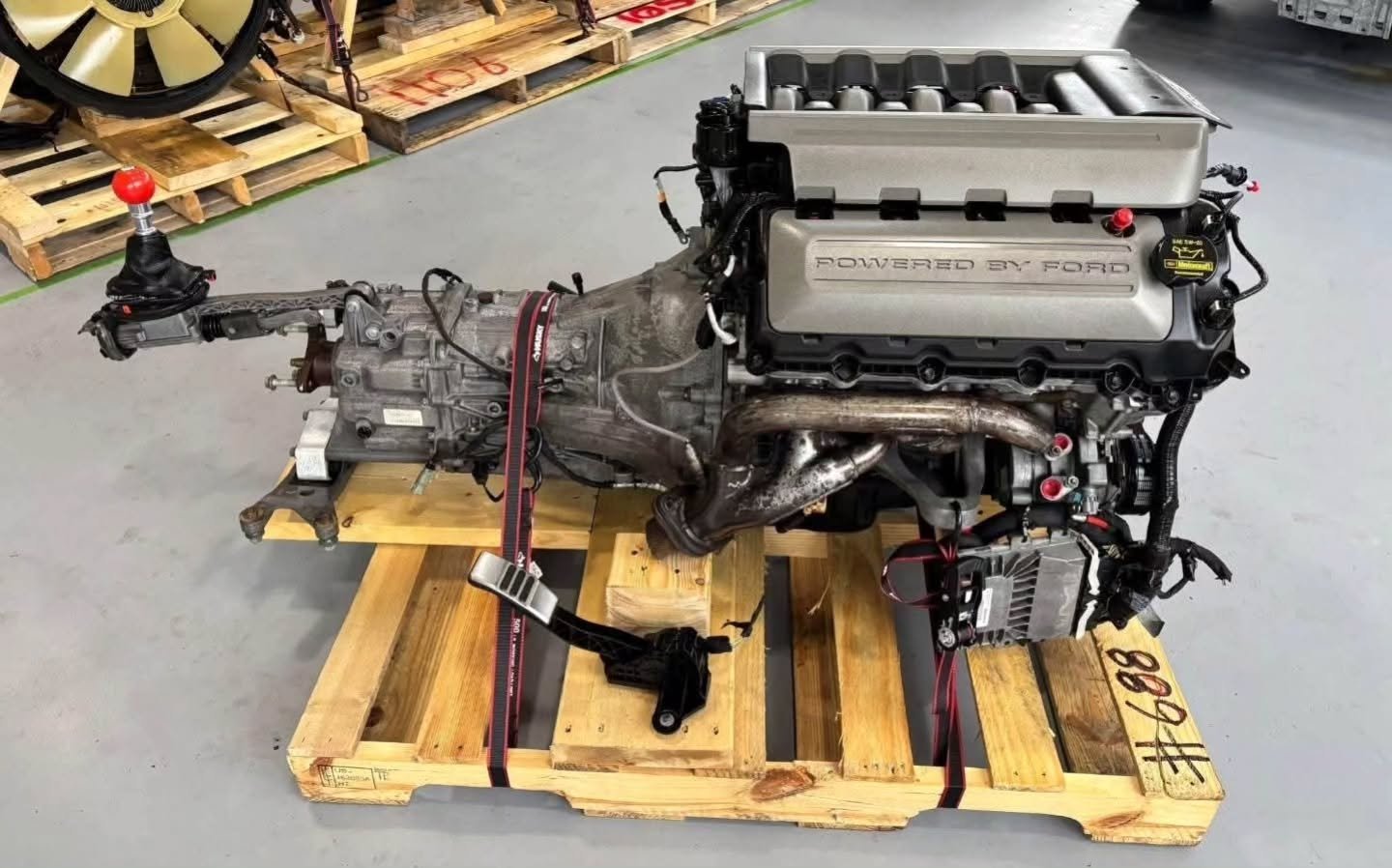
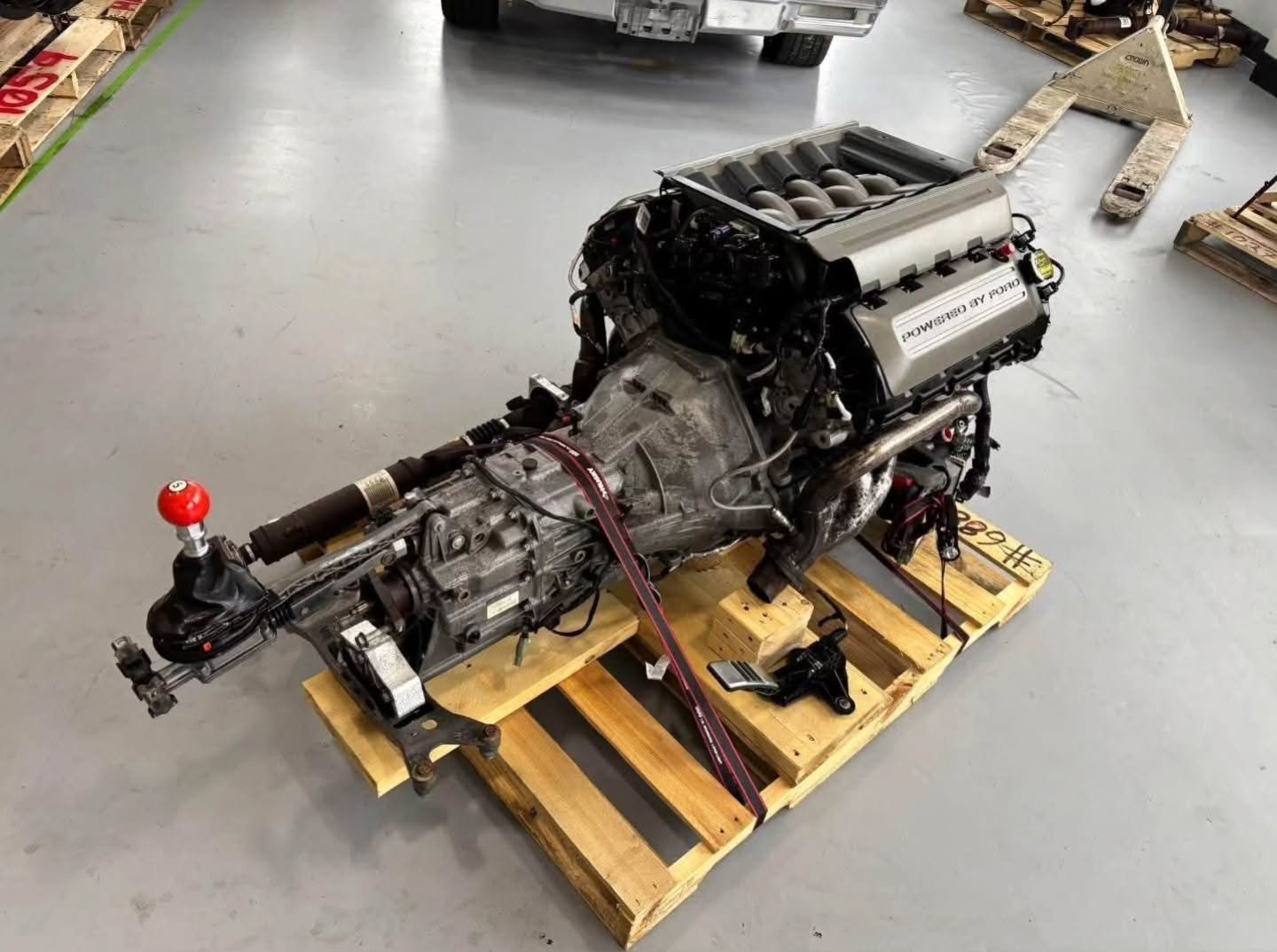
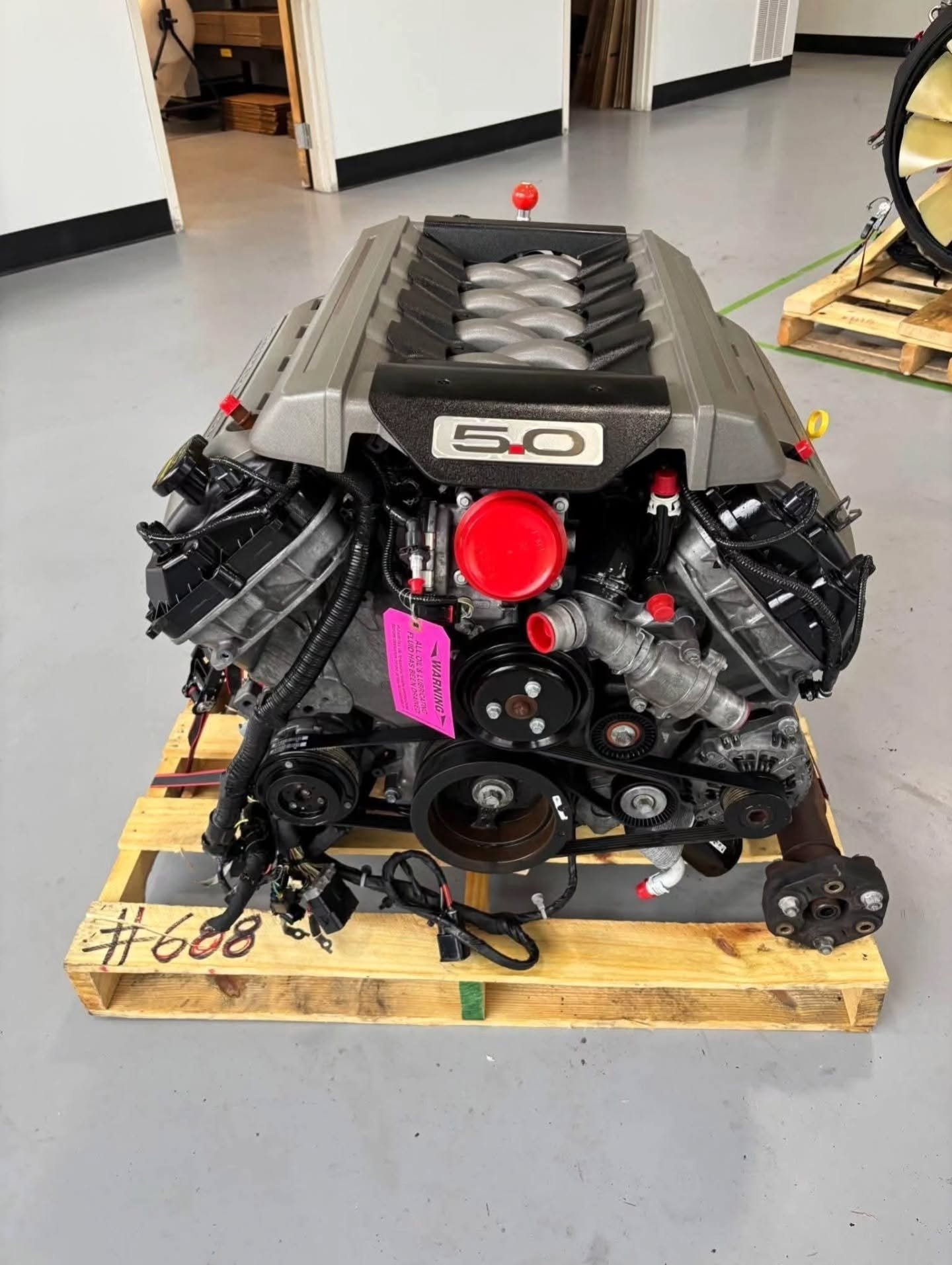
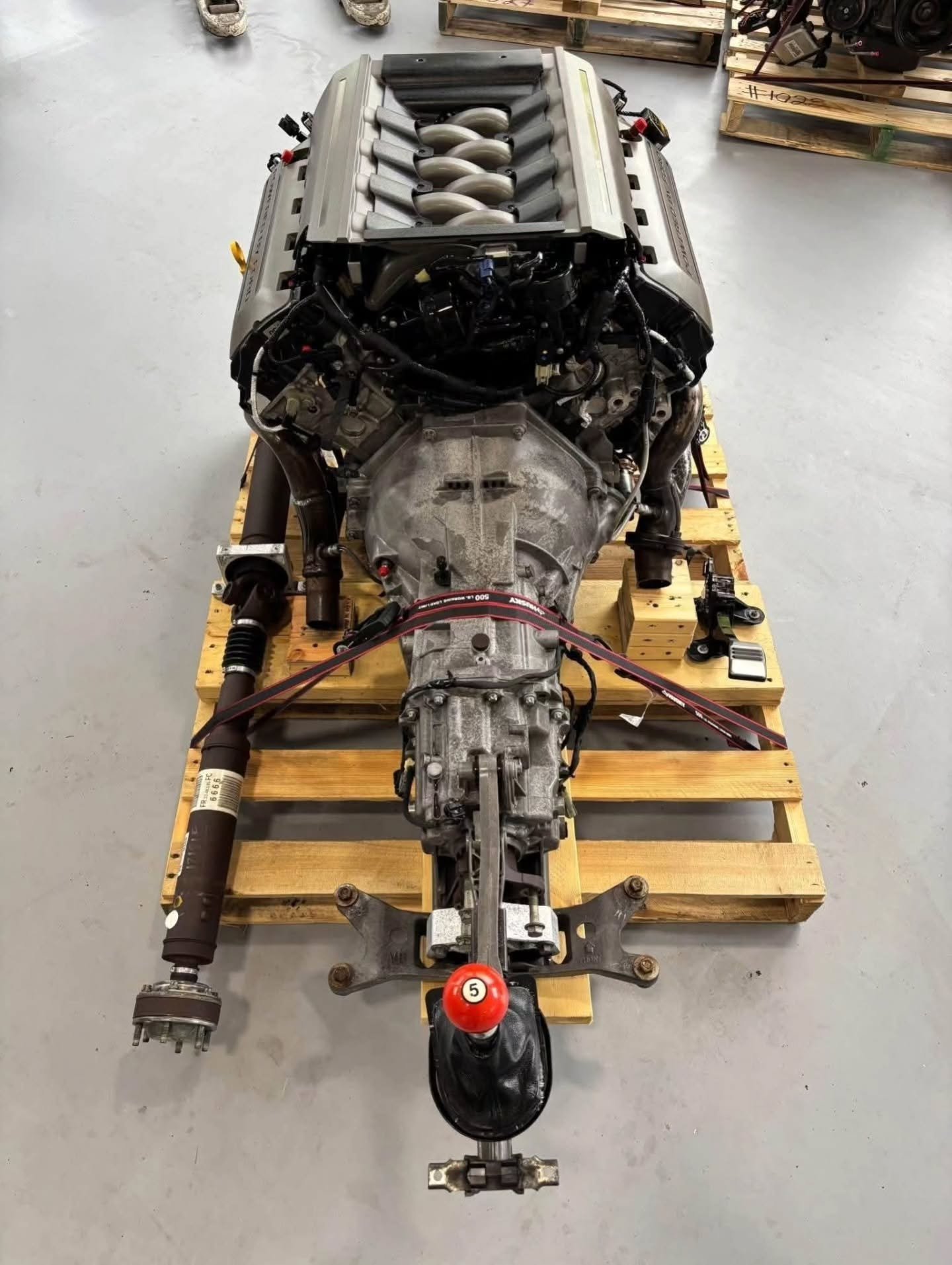
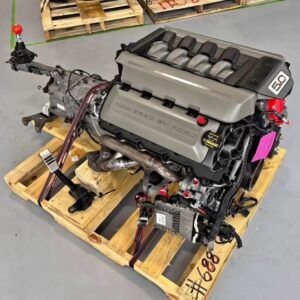
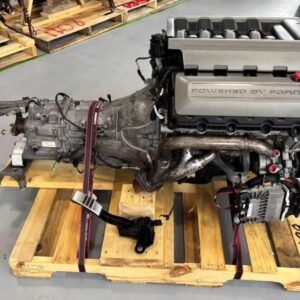
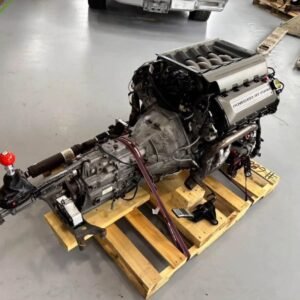
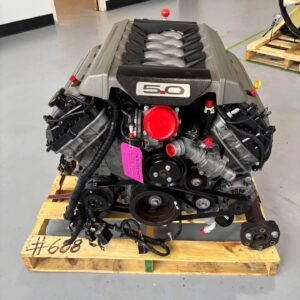
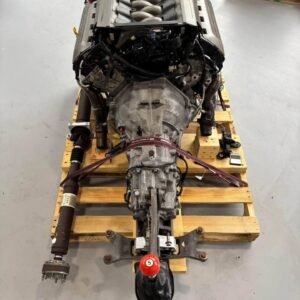
5.0 Coyote Gen 2
Original price was: $6,500.00.$4,000.00Current price is: $4,000.00.
Technical Specifications
Mileage: 30,000
Engine Type: 5.0L (302 cubic inches), 90-degree V8, DOHC, 4 valves per cylinder.
Engine Family: Ford Coyote Gen 2, Modular platform.
Block Material: Lightweight aluminum with cross-bolted main bearing caps and reinforced main bearing bulkheads.
Horsepower: 435 HP (factory Mustang GT rating).
Torque: 400 lb-ft (factory Mustang GT rating).
Compression Ratio: 11.0:1.
Fuel System: Dual fuel injection (port and direct injection).
Variable Valve Timing: Twin Independent VCT (intake and exhaust).
Factory Applications: 2015–2017 Ford Mustang GT and 2015–2017 Ford F-150 5.0L.
Ford 5.0 Coyote Gen 2 Engine for Sale | 2015–2017 Mustang GT V8
Looking for a Ford 5.0 Coyote Gen 2 engine for sale? McClain Auto Part offers used Ford 5.0L Coyote V8 engines for Mustang GT replacements, compatible Ford F-150 applications, and custom engine swaps.
The second-generation Coyote is known for its impressive naturally aspirated power, aluminum construction, and advanced variable camshaft timing. In the 2015–2017 Mustang GT, it produces 435 horsepower and 400 lb-ft of torque.
Whether you’re replacing a damaged engine or building a performance vehicle, the Gen 2 Coyote provides a strong foundation. Our team can help confirm the correct engine configuration and included components before you order.
Ford 5.0 Coyote Gen 2 Engine: Key Features
Engine: Ford 5.0L Coyote Gen 2 V8
Model years: 2015–2017
Condition: Used OEM engine
Advertised mileage: 30,000 miles
Displacement: 5.0 liters / 302 cubic inches
Horsepower: 435 hp (Mustang GT configuration)
Torque: 400 lb-ft (Mustang GT configuration)
Engine block: Aluminum
Cylinder heads: Aluminum
Fuel injection: Electronic port fuel injection
Valvetrain: DOHC, 32 valves
Camshaft timing: Twin Independent Variable Camshaft Timing (Ti-VCT)
Warranty: Six-month limited warranty
Shipping: Nationwide freight shipping available
Location: Cleveland, Ohio
Mileage, included accessories, and inspection results should be confirmed for the individual engine before purchase.
What Is the Ford Gen 2 Coyote 5.0 Engine?
The Gen 2 Coyote is Ford’s second major version of the modern 5.0-liter DOHC V8. It appeared in the 2015 Mustang GT and continued through the 2017 model year.
Ford improved the original Coyote engine with revised cylinder heads, larger valves, updated camshafts, and stronger internal components.
These changes improved airflow and high-RPM performance while maintaining the naturally aspirated design.
The result is an engine that combines everyday drivability with substantial performance potential.
Improved Cylinder Heads and Valvetrain
The Gen 2 features redesigned aluminum cylinder heads with improved airflow characteristics.
Ford also introduced larger intake and exhaust valves, revised camshaft profiles, and stiffer valve springs.
Together, these improvements help the engine breathe more effectively at higher RPM.
Twin Independent Variable Camshaft Timing
The Gen 2 Coyote uses Ford’s Ti-VCT system.
This technology adjusts intake and exhaust camshaft timing independently to improve performance across different engine speeds.
As a result, the engine delivers responsive acceleration while maintaining efficiency during normal driving.
Improved Intake Manifold
The Mustang GT version features an updated intake manifold with charge motion control valves.
These valves influence airflow at lower engine speeds, improving air-fuel mixing and combustion efficiency.
They also support the engine’s ability to produce strong power across a broad RPM range.
Ford Gen 2 Coyote Engine Specifications
| Specification | Mustang GT Gen 2 |
|---|---|
| Manufacturer | Ford Motor Company |
| Engine family | Coyote / Modular V8 |
| Generation | Second generation |
| Model years | 2015–2017 |
| Displacement | 5.0L / 302 cubic inches |
| Configuration | 90-degree V8 |
| Engine block | Aluminum |
| Cylinder heads | Aluminum |
| Valvetrain | DOHC, 4 valves per cylinder |
| Total valves | 32 |
| Fuel system | Port fuel injection |
| Aspiration | Naturally aspirated |
| Horsepower | 435 hp |
| Torque | 400 lb-ft |
| Compression ratio | 11.0:1 |
| Bore | 92.2 mm |
| Stroke | 92.7 mm |
| Camshaft timing | Ti-VCT |
| Factory transmissions | MT82 manual / 6R80 automatic |
These specifications apply to the factory 2015–2017 Mustang GT engine. The F-150 version differs in several areas.
Ford Mustang GT vs. F-150 Gen 2 Coyote
Although both vehicles use a 5.0-liter Coyote V8, their engines are not identical.
Ford optimized the Mustang GT engine for higher-RPM performance. In contrast, the F-150 version emphasizes torque delivery and truck operation.
| Specification | Mustang GT | F-150 |
|---|---|---|
| Model years | 2015–2017 | 2015–2017 |
| Displacement | 5.0L | 5.0L |
| Horsepower | 435 hp | 385 hp |
| Torque | 400 lb-ft | 387 lb-ft |
| Compression ratio | 11.0:1 | 10.5:1 |
| Fuel system | Port injection | Port injection |
| Primary application | Performance car | Pickup truck |
The engines also differ in their intake configurations, camshaft specifications, accessories, and calibration.
Therefore, a Mustang engine should not automatically be treated as a direct replacement for an F-150 engine.
If you’re replacing an existing engine, provide your VIN so the correct configuration can be identified.
Gen 1 vs. Gen 2 vs. Gen 3 Coyote Engines
Understanding the differences between Coyote generations helps you choose the right engine.
Gen 1 Coyote: 2011–2014
The original Coyote introduced Ford’s modern 5.0-liter DOHC V8 to the Mustang GT.
It features aluminum construction, four valves per cylinder, port fuel injection, and Ti-VCT.
Later Gen 1 Mustang GT models produced approximately 420 horsepower.
Gen 2 Coyote: 2015–2017
The second generation introduced important mechanical improvements.
These included revised cylinder heads, larger valves, updated camshafts, stronger connecting rods, and an improved intake manifold.
The Mustang GT version produces 435 horsepower and 400 lb-ft of torque.
Like the Gen 1, it uses port fuel injection.
Gen 3 Coyote: 2018–2023 Mustang GT
The third-generation Mustang engine introduced both direct and port fuel injection.
It also received further internal revisions, including a higher compression ratio.
The standard 2018 Mustang GT was rated at 460 horsepower and 420 lb-ft of torque.
Which Coyote Generation Should You Buy?
For a factory replacement, matching the original engine generation and application is generally the best starting point.
For a custom swap, your choice depends on budget, power goals, electronics, and available supporting components.
The Gen 2 remains attractive because of its factory performance and established aftermarket support.
Gen 2 Coyote Engine Internal Components
Ford improved several internal components when developing the second-generation Mustang Coyote.
Factory Gen 2 Mustang engine features include:
Aluminum engine block
Forged steel crankshaft
Revised cast pistons
Sinter-forged connecting rods
Redesigned cylinder heads
Larger intake and exhaust valves
Updated camshafts
Revised valve springs
Timing chains and variable camshaft timing components
These are general factory features.
Does the Engine Have Forged Aftermarket Internals?
A standard Gen 2 Coyote should not be confused with a professionally built performance engine.
Upgrades such as Manley H-beam rods, aftermarket pistons, ARP connecting rod bolts, or a modified oiling system are not guaranteed factory equipment.
If the available engine has aftermarket upgrades, their brands, specifications, and installation records should be confirmed before purchase.
Used Coyote Engine Condition and Inspection
Mechanical condition is one of the most important factors when buying a used performance engine.
Our listing advertises a used engine with 30,000 miles. Before ordering, customers should confirm the available mileage documentation and inspection information.
Compression Testing
Compression testing helps assess cylinder sealing and identify significant differences between cylinders.
For a V8 engine, technicians generally compare readings across all eight cylinders while following the correct testing procedure.
Consistent results can be encouraging. However, compression readings alone cannot guarantee overall engine condition.
Ask our team for the available compression-test results for the exact engine.
Visual Inspection
Important areas to inspect include:
Engine block and cylinder heads
External oil and coolant leaks
Valve covers and seals
Oil pan condition
Intake manifold
Wiring and sensor connections
Timing cover
Signs of impact or improper handling
Oil and Cooling System Condition
Engine oil and coolant condition may provide information about previous maintenance and possible mechanical problems.
For example, unusual contamination or evidence of oil and coolant mixing may require further investigation.
Timing Chain and Camshaft Timing System
The Gen 2 Coyote uses a timing chain system with variable camshaft timing components.
Condition checks should consider the timing covers, chain tensioners, guides, camshaft phasers, and any available service history.
Before buying, confirm which inspections were completed and whether supporting records are available.
What Comes With the Ford Coyote Gen 2 Engine?
The included components depend on the specific engine assembly.
Typical Engine Components
A used Coyote engine may include:
Complete engine long block
Cylinder heads and valve covers
Timing components
Intake manifold
Port fuel injectors and fuel rails
Oil pan
Attached engine sensors
Components That Require Confirmation
The following items are not automatically included:
ECU or PCM
Engine wiring harness
Ford Performance control pack
Alternator
Starter motor
Air-conditioning compressor
Power steering components
Exhaust manifolds
Transmission
Flywheel or torque converter
Engine mounts
Some available engines may include additional accessories.
Contact our team before ordering to confirm the exact components supplied with the advertised unit.
Ford Gen 2 Coyote Engine Compatibility
The second-generation Coyote is associated with the following factory applications:
2015–2017 Ford Mustang GT
The 2015–2017 Mustang GT uses the Gen 2 Coyote in its factory configuration.
For a replacement, verify the vehicle’s VIN and confirm whether you need a complete engine assembly or long block.
Existing electronics and accessories may be reusable depending on their condition and compatibility.
2015–2017 Ford F-150 5.0L
The F-150 uses a related version of the Gen 2 Coyote architecture.
However, the truck engine has different specifications and application-specific components.
Before ordering, confirm whether the available engine is a Mustang or F-150 variant.
Popular Coyote Swap Applications
The Gen 2 is also used in projects involving:
1979–1993 Fox-body Mustang
Classic Ford Mustang
Early Ford Bronco
Ford F-100 pickup trucks
Ford Falcon and Fairlane
Custom street rods
Restomod projects
Performance-oriented custom vehicles
Engine swaps require careful planning. Fitment depends on the chassis, mounting system, transmission, wiring, and other components.
Ford Coyote Gen 2 Engine Swap Guide
The Gen 2 Coyote is a strong candidate for custom V8 conversions.
However, it is more electronically complex than many older pushrod Ford engines.
ECU and Wiring Requirements
The Gen 2 uses electronic engine management to control fuel injection, ignition, throttle operation, and variable camshaft timing.
Swap builders generally need compatible engine wiring and an appropriate ECU or control pack.
Ford Performance and aftermarket suppliers offer control solutions for selected applications.
Confirm the engine’s exact configuration before choosing a control system.
Fuel System Requirements
Unlike the Gen 3, the Gen 2 Coyote uses port fuel injection.
Therefore, it does not require the factory-style high-pressure direct-injection system found on later Mustang engines.
However, your fuel pump, pressure regulation, fuel lines, and injectors must still match the engine’s requirements.
Transmission Compatibility
Factory Mustang GT transmission options included:
- MT82 six-speed manual
- 6R80 six-speed automatic
Custom projects may also use other compatible transmission systems with the appropriate conversion components.
Before ordering, check the bellhousing pattern, clutch or torque converter, transmission controls, mounting points, and driveshaft requirements.
Cooling and Exhaust
A successful Coyote swap requires suitable radiator capacity, cooling hoses, exhaust routing, and engine-bay clearance.
The engine’s wide DOHC cylinder heads may create clearance challenges in some older vehicles.
Measure the available space and review your conversion components before purchasing.
Shipping Your Ford 5.0 Coyote Engine
McClain Auto Part offers nationwide freight shipping from Cleveland, Ohio.
Due to the engine’s weight, secure packaging and careful handling are important during transportation.
Shipping Process
Our advertised shipping process includes:
- Confirming the engine configuration and availability.
- Reviewing the delivery address.
- Preparing the engine for freight transportation.
- Securing the assembly to a suitable shipping pallet.
- Arranging carrier pickup.
- Providing tracking information after dispatch.
Most orders are advertised as processing within one to three business days after payment confirmation.
Actual timing depends on inventory availability and freight arrangements.
Request a Shipping Quote
Shipping costs depend on your destination and delivery requirements.
Provide your ZIP code and confirm whether the destination is residential or commercial.
Liftgate service and other delivery requirements may affect the final shipping charge.
Local pickup may also be arranged in Cleveland, Ohio.
Six-Month Limited Engine Warranty
McClain Auto Part advertises a six-month limited warranty on qualifying used engines.
This warranty is intended to cover eligible internal mechanical defects during the applicable coverage period.
However, damage caused by improper installation, misuse, inadequate lubrication, overheating, or unrelated components may be excluded.
If a problem occurs, contact our team with your order information and a description of the issue.
Review the complete warranty terms before completing your purchase.
Why Buy a Ford Coyote Engine From McClain Auto Part?
Choosing the right replacement engine requires more than checking horsepower figures.
You also need accurate information about the engine’s original application, mileage, condition, included accessories, and compatibility.
At McClain Auto Part, we help customers review those details before ordering.
Our purchasing process focuses on:
OEM engine identification
Available mileage information
Vehicle compatibility assistance
Inspection information
Confirmation of included components
Warranty terms
Nationwide shipping options
Support for replacement and swap projects
Whether you’re repairing a Mustang GT or planning a custom Ford build, our team can help you choose the right engine configuration.
Frequently Asked Questions
How Much Does a Ford Gen 2 Coyote Engine Cost?
Pricing depends on mileage, condition, included accessories, and whether the engine has performance upgrades.
Contact our team for the current price and shipping quote.
How Many Miles Are on This Engine?
The original listing advertises 30,000 miles.
Confirm the exact mileage and available donor vehicle documentation before ordering.
How Much Horsepower Does a Gen 2 Coyote Produce?
The factory 2015–2017 Mustang GT engine produces 435 horsepower and 400 lb-ft of torque.
The corresponding F-150 version produces 385 horsepower and 387 lb-ft.
Does the Gen 2 Coyote Have Direct Injection?
No. The Gen 2 uses electronic port fuel injection.
Ford introduced combined port and direct fuel injection in the 2018 Gen 3 Mustang Coyote.
Is the Gen 2 Coyote Better Than the Gen 1?
The Gen 2 offers improvements in cylinder-head airflow, camshafts, intake design, and other components.
It also produces more factory horsepower than the original Mustang GT version.
However, the best choice depends on your project and compatibility requirements.
Will a Gen 2 Coyote Fit My 2016 Mustang GT?
A correctly configured Gen 2 Mustang GT engine may be suitable.
However, confirm your VIN, existing components, and engine configuration before ordering.
Can I Use a Mustang Coyote Engine in an F-150?
A Mustang Coyote may be adaptable to certain F-150 applications.
However, the engines use different configurations and supporting components.
It should not be treated as a direct replacement without a detailed compatibility review.
Does the Engine Come With an ECU and Wiring Harness?
These items are not guaranteed unless specifically included in the order.
Contact our team to confirm available electronics and accessories.
Is This Engine Ready for an LS-Style Swap?
The Coyote is a Ford DOHC V8 rather than a GM LS engine.
It can be used for custom engine swaps, but requires Coyote-compatible mounting, wiring, fuel, and transmission components.
Can I Supercharge a Gen 2 Coyote?
Yes. The Gen 2 Coyote platform supports aftermarket supercharger and turbocharger systems.
However, safe power output depends on engine condition, tuning, fuel quality, and supporting modifications.
There is no universal guaranteed horsepower limit for a used engine.
Is the Engine Compression Tested?
The original product description includes compression-test readings.
Ask for the available test documentation for the specific engine before purchasing.
What Does the Warranty Cover?
The advertised six-month limited warranty applies to qualifying internal mechanical defects.
Confirm the full terms, exclusions, and claims process before ordering.
Do You Ship Ford Coyote Engines Nationwide?
Yes. Nationwide freight delivery is available from Cleveland, Ohio.
Shipping costs and delivery estimates depend on the destination.
Can I Pick Up the Engine Locally?
Local pickup may be available by prior arrangement.
Contact our team to confirm availability and collection requirements.
Order Your Ford 5.0 Coyote Gen 2 Engine Today
If you’re searching for a used Ford 5.0 Coyote Gen 2 engine for sale, McClain Auto Part can help you review the available options.
Whether you need a replacement for a 2015–2017 Mustang GT, a compatible F-150 engine, or a Coyote V8 for a custom swap, confirming the correct configuration is essential.
Before ordering, our team can help you verify:
Engine model and donor application
Exact mileage
Mechanical condition and inspection results
Included components
ECU and wiring requirements
Warranty coverage
Price and shipping arrangements
Visit McClain Auto Part to explore our engine inventory or contact our team for assistance.
Be the first to review “5.0 Coyote Gen 2”
You must be logged in to post a review.
Related products
Nissan
our products
Reviews
There are no reviews yet.