Uncategorized
Can You Put a Hellcat Engine in Any Dodge?
Aug
The short answer is that it depends on the specific Dodge model. Some Dodge vehicles received the Hellcat engine from the factory and accept a replacement engine with minimal additional work. Others require significant engineering to make the swap work. A few are not practical candidates at all.
This guide covers every major Dodge model in the context of Hellcat engine compatibility, what each application requires, and what to plan before you commit to the project.
Vehicles That Received the Hellcat Engine From the Factory
The most straightforward Hellcat engine application is always a factory application. If the vehicle left the factory with a 6.2L supercharged HEMI, replacing a failed engine with a matching unit is a direct replacement rather than a swap. The mounting, fuel system, cooling circuits, and electronics are already designed for the engine.
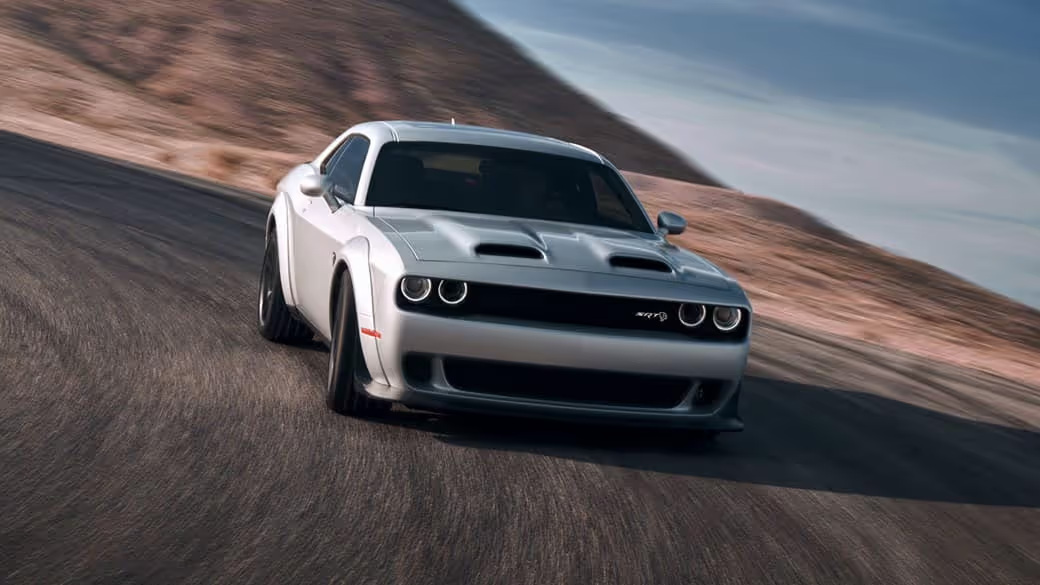
Dodge Challenger SRT Hellcat
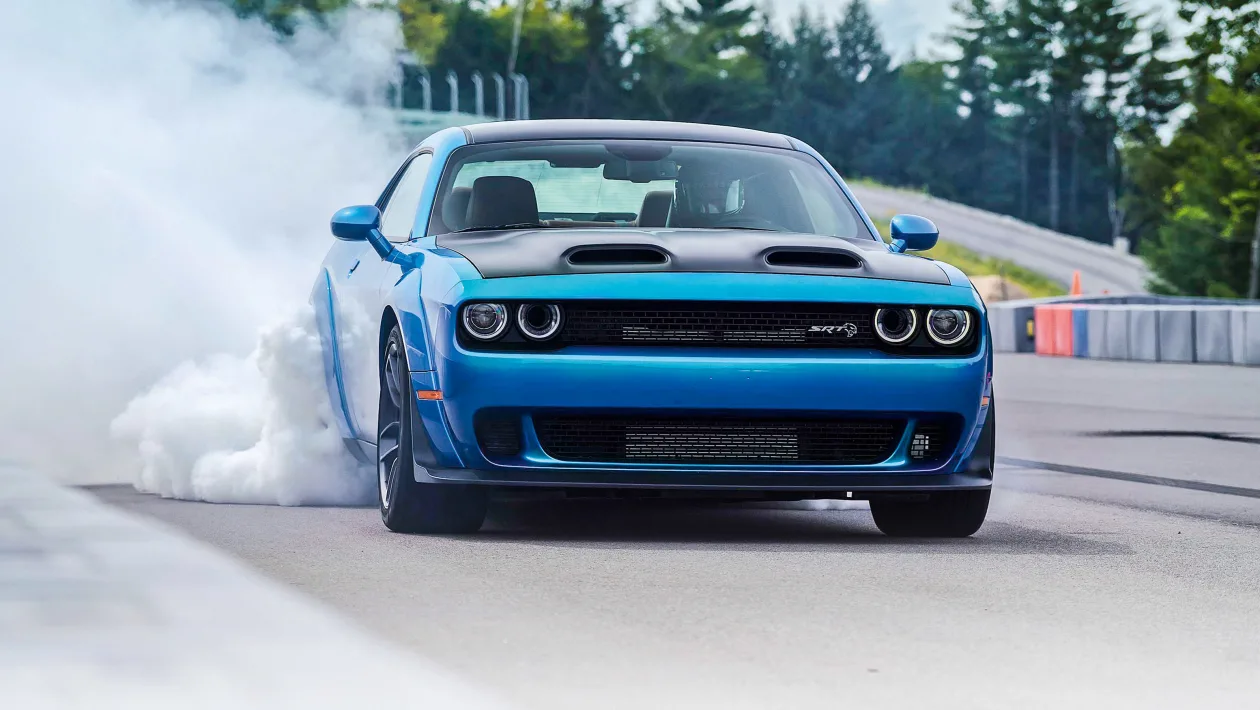
The Challenger SRT Hellcat is the primary factory application for the 6.2L supercharged HEMI in the Challenger lineup. It ran from 2015 through 2023 across standard Hellcat, Redeye, Widebody, and Super Stock configurations.
For a direct replacement in a Challenger SRT Hellcat, the engine mounts, fuel system, cooling circuits, intercooler system, transmission, and electronics are all already matched to the engine. The primary requirement is matching the correct variant to the original. A standard Hellcat engine does not directly replace a Redeye without addressing the supercharger inlet configuration, fuel system, and ECU calibration differences between the two variants.
Confirm your specific trim level and engine variant before ordering a replacement. Provide the donor VIN and your vehicle VIN to the seller so both variants can be cross-referenced before the engine ships.
Dodge Charger SRT Hellcat
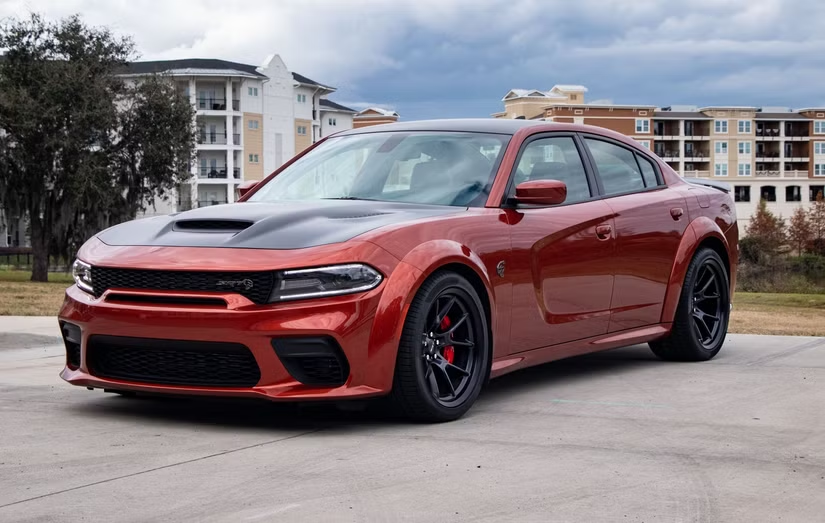
The Charger SRT Hellcat ran from 2015 through 2023 in standard Hellcat and Redeye configurations. Like the Challenger, it is a factory application that accepts a matching replacement engine without significant additional engineering.
The Charger was paired with the TorqueFlite 8HP90 eight-speed automatic in most configurations. The Challenger offered both the automatic and the Tremec TR-6060 six-speed manual. For a Charger replacement, confirm the automatic transmission configuration before ordering.
Dodge Durango SRT Hellcat
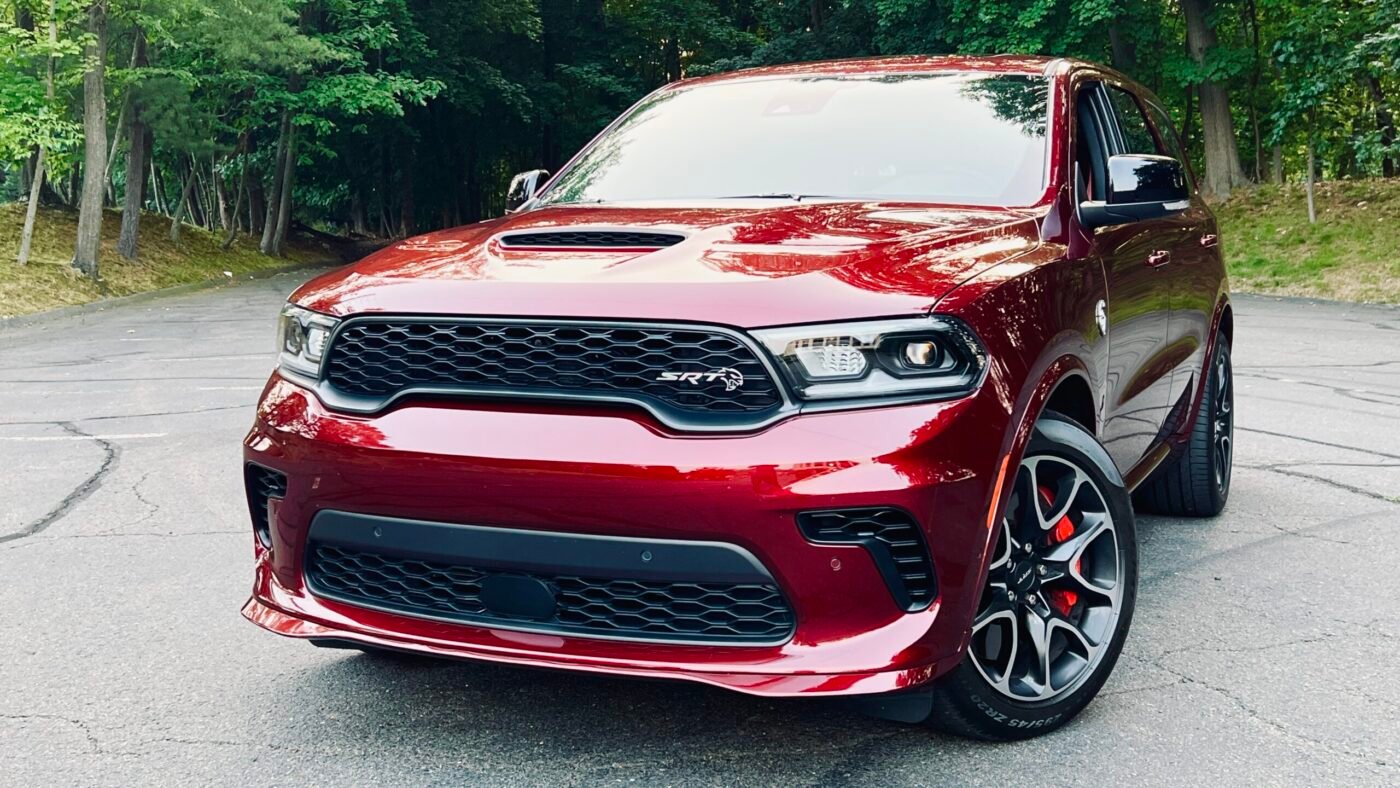
The Durango SRT Hellcat was produced for the 2021 model year only, making it a limited-production factory Hellcat application. It produces 710 horsepower from the same basic 6.2L supercharged HEMI architecture used in the Challenger and Charger.
The Durango SRT Hellcat engine sits in a longitudinal mid-size SUV application with unique engine bay dimensions, cooling system routing, and drivetrain configuration. A direct replacement in a Durango SRT Hellcat follows the same logic as the Challenger and Charger: match the variant, confirm the donor VIN, and the supporting systems are already in place.
Sourcing a replacement engine specifically for a Durango SRT Hellcat application is more specialized than sourcing for the Challenger or Charger because the Durango was produced for one year only. Confirm with the seller that the donor engine is from a compatible application before purchasing.
Dodge Vehicles That Can Receive a Hellcat Engine With Modification
Dodge Challenger Non-Hellcat Trims
The Dodge Challenger in non-Hellcat trims, meaning the SR, SXT, GT, R/T, R/T Scat Pack, and similar configurations, shares the same basic platform and engine bay as the SRT Hellcat but was not factory-equipped with the 6.2L supercharged HEMI.
Fitting a Hellcat engine into a non-Hellcat Challenger is one of the more achievable Dodge-to-Dodge Hellcat swaps because the platform was designed around the same engine family. The engine bay dimensions are the same. The motor mount locations are compatible. The basic architecture is shared.
What a non-Hellcat Challenger swap still requires:
Engine mounting: The motor mount configuration on a non-Hellcat Challenger is compatible with the Gen III HEMI family. However, confirm the specific mount configuration for your Challenger’s engine is compatible with the 6.2L Hellcat mounting points before assuming a direct bolt-in.
Fuel system: The non-Hellcat Challenger fuel system is not designed for the Hellcat’s high-pressure direct injection requirements. The high-pressure fuel pump, fuel rails, injectors, and fuel supply system all require upgrading to support the Hellcat’s fuel delivery needs.
Cooling system upgrade: The Hellcat requires both a main engine cooling circuit and a separate supercharger intercooler circuit. A non-Hellcat Challenger has only the main engine cooling circuit in the factory configuration. Adding the intercooler circuit requires sourcing and mounting the intercooler heat exchanger, intercooler pump, reservoir, and associated plumbing.
ECU and electronics: The non-Hellcat Challenger’s factory ECU is calibrated for its original engine and does not manage the Hellcat’s supercharger, direct injection system, or intercooler pump. A Hellcat engine swap into a non-Hellcat Challenger requires either a Hellcat-specific ECU and harness from the donor vehicle or a standalone engine management system.
Transmission: Confirm transmission compatibility. If the non-Hellcat Challenger uses the same TorqueFlite 8HP90 automatic as the SRT Hellcat, the transmission may be compatible. If the non-Hellcat Challenger uses a different transmission, address the bellhousing and control compatibility before proceeding.
Dodge Charger Non-Hellcat Trims
The same logic applies to non-Hellcat Charger trims including the SXT, GT, R/T, R/T Scat Pack, and similar configurations. The platform is shared with the SRT Hellcat. The engine bay accommodates the 6.2L HEMI family. The swap is more achievable than fitting a Hellcat into a completely different vehicle platform.
The requirements are essentially the same as the non-Hellcat Challenger swap: fuel system upgrade for direct injection, intercooler circuit addition, ECU and electronics from the donor vehicle or standalone system, and transmission compatibility confirmation.
The Charger was not available with a factory manual transmission in the Hellcat configuration. For a Hellcat swap into a non-Hellcat Charger, the automatic transmission path is more straightforward if the existing automatic is compatible.
First and Second Generation Dodge Challenger (1970-1974 and 2008 Generation Context)
The classic first-generation Dodge Challenger from 1970 to 1974 represents a different engineering conversation from the modern platform swap discussed above. The Hellcat community has documented swaps into classic Challenger bodies, but these involve significantly more fabrication than a modern platform swap.
Classic Challenger engine bay dimensions are broadly compatible with the Gen III HEMI block, which is one reason the classic Mopar community has embraced Hellcat swaps into these platforms. However, the following items require planning and fabrication:
- Motor mount fabrication or aftermarket kit for the Gen III HEMI in the classic Challenger chassis
- Oil pan selection for chassis clearance
- Exhaust header routing for the classic chassis
- Fuel system build for direct injection requirements
- Full standalone engine management rather than any factory electronics carryover
- Intercooler circuit routing and heat exchanger placement in the classic front end
- Radiator sizing and dual circuit cooling layout
The classic Challenger Hellcat swap is well-documented in the Mopar performance community. Aftermarket motor mount kits, oil pans, and headers exist specifically for Gen III HEMI installation in classic A-body and B-body Chrysler platforms. If you are starting this project, research the specific suppliers who produce hardware for your exact chassis rather than attempting to fabricate everything from scratch.
Classic Dodge Charger (B-Body Platform)
The classic B-body Dodge Charger from the 1966 through 1970 era is one of the most common classic Mopar platforms for Hellcat engine swaps in the enthusiast community. The B-body platform’s engine bay dimensions accommodate the Gen III HEMI well relative to most other classic platform swaps.
The engineering requirements are similar to the classic Challenger swap discussed above. Motor mount kits for the Gen III HEMI in B-body applications exist from aftermarket suppliers, which simplifies the fabrication requirement compared to building from scratch.
One distinction between the B-body and A-body platforms is the engine bay width and firewall geometry. Confirm the specific motor mount kit and oil pan combination you plan to use is validated for your exact B-body model and year rather than assuming all B-body platforms are identical in their fitment requirements.
Dodge Viper
The Dodge Viper is an interesting case in the Dodge family for Hellcat compatibility discussion. The Viper uses a longitudinally mounted V10 in a front-engine rear-wheel drive configuration. The engine bay is sized around the V10 rather than the V8 HEMI family.
Fitting a Hellcat into a Viper is not a bolt-in operation and is not a commonly documented swap in the community for practical reasons. The Viper’s V10 already produces more power than the standard Hellcat in most configurations, which reduces the motivation for the swap. The engineering required to mount a different engine family in the Viper’s specifically designed engine bay is significant. This application is consequently not a recommended Hellcat swap path for most builders.
Dodge Dart
The Dodge Dart from 2013 through 2016 used a compact front-wheel drive or all-wheel drive platform based on the Alfa Romeo Giulietta architecture. The Dart was never offered with a V8 engine and its transverse engine mounting architecture is fundamentally incompatible with the longitudinal Gen III HEMI.
Fitting a Hellcat engine into a Dart is not a practical application. The platform architecture, engine orientation, drivetrain configuration, and engine bay dimensions do not support the Gen III HEMI. This application is not recommended.
Dodge Journey
The Dodge Journey uses a front-wheel drive or all-wheel drive crossover SUV platform with transverse engine mounting. Like the Dart, the Journey’s platform architecture is fundamentally incompatible with the longitudinal Gen III HEMI.
A Hellcat engine swap into a Journey is not a practical application. The transverse engine mounting, front-wheel drive primary drivetrain, and compact engine bay dimensions do not support the Gen III HEMI in any practical configuration.
Dodge Durango Non-Hellcat Trims
The Dodge Durango in non-Hellcat trims uses a longitudinal engine mounting configuration and rear-wheel drive or all-wheel drive architecture that is more compatible with the Gen III HEMI than transverse-mount platforms.
The Durango’s engine bay accommodates the 5.7L HEMI and 6.4L HEMI in factory configurations. The 6.2L supercharged HEMI’s additional height from the supercharger assembly creates a clearance challenge that requires careful confirmation before planning this swap. The supercharger sits significantly higher than the intake manifold on a naturally aspirated HEMI and may not clear the Durango’s hood line without modification in non-SRT Hellcat trim levels.
Confirm hood clearance with the supercharger assembly installed before committing to a Hellcat swap in a non-Hellcat Durango. The SRT Hellcat Durango’s engine bay confirms the engine fits in that specific application, but non-Hellcat Durango trim levels may have different hood geometry or hood line that affects supercharger clearance.
The fuel system, intercooler circuit, and ECU requirements are the same as other non-factory Hellcat applications discussed in this guide.
Dodge Ram 1500 (Non-TRX)
The Ram 1500 TRX received the 6.2L supercharged HEMI from the factory for 2021 through 2024, confirming that the engine physically fits in the Ram 1500 platform. Non-TRX Ram 1500 trucks did not receive this engine from the factory.
For a non-TRX Ram 1500 Hellcat swap, the TRX confirms engine bay compatibility from a dimensional standpoint. The requirements are the familiar set of fuel system upgrades for direct injection, intercooler circuit addition, ECU and electronics from the donor TRX or a standalone system, and transmission confirmation.
One consideration specific to the Ram 1500 is the truck-specific calibration differences between the car-based Hellcat and the TRX application. If sourcing an engine from a car-based Hellcat donor, the TRX’s truck-specific calibration does not carry over. Plan for a standalone engine management system or a Hellcat car-specific ECU solution rather than attempting to use TRX-specific calibration in a non-TRX truck application.
Dodge Vehicles That Are Not Practical Hellcat Swap Candidates
Some Dodge vehicles are not practical Hellcat engine swap candidates due to platform architecture, engine orientation, or drivetrain configuration.
| Dodge Model | Reason Not Practical |
|---|---|
| Dodge Dart (2013-2016) | Transverse front-wheel drive platform, incompatible with longitudinal Gen III HEMI |
| Dodge Journey | Transverse front-wheel drive crossover, incompatible architecture |
| Dodge Avenger | Transverse front-wheel drive platform, incompatible with Gen III HEMI |
| Dodge Caliber | Transverse front-wheel drive platform, incompatible with Gen III HEMI |
| Dodge Neon | Transverse front-wheel drive compact, incompatible architecture |
| Dodge Nitro | Transverse mounting and compact SUV architecture create significant challenges |
The common thread across these models is transverse engine mounting in a front-wheel drive or all-wheel drive architecture. The Gen III HEMI is a longitudinal V8 designed for rear-wheel drive applications. The two architectures are fundamentally incompatible in any practical sense.
Key Requirements for Any Hellcat Swap Into a Dodge
Regardless of which Dodge platform you are putting the Hellcat into, the same core requirements apply to every non-factory application.
Fuel System
The Hellcat uses a high-pressure cam-driven direct injection fuel pump. Any non-factory application requires upgrading the fuel supply system to support the engine’s high-pressure fuel delivery requirements. This includes the in-tank fuel pump, fuel lines, and any associated components rated for direct injection operating pressures.
Supercharger Intercooler Circuit
The Hellcat runs a separate cooling circuit for the supercharger intercooler that is completely independent from the main engine cooling system. Every non-factory Hellcat application consequently requires sourcing and installing the intercooler heat exchanger, intercooler pump, reservoir, and plumbing as a complete additional cooling system.
ECU and Engine Management
The factory Hellcat PCM is VIN-locked to the original donor vehicle. For any swap into a non-factory application, either the donor vehicle’s complete electronics package carries over or a standalone engine management system replaces it. A standalone ECU is the most common and most straightforward solution for swap applications.
Motor Mounts
Motor mount solutions vary by platform. Modern Dodge platforms that share the Gen III HEMI architecture have compatible mounting geometry. Classic Mopar platforms have aftermarket motor mount kits available. Non-Dodge platforms require custom fabrication or a sourced aftermarket kit if one exists for the specific application.
Cooling System Capacity
The main engine cooling system must be sized for the Hellcat’s thermal output. This typically means a larger radiator than the original vehicle’s specification in most swap applications, along with electric fan solutions sized appropriately for the engine’s heat rejection requirements.
What to Confirm Before Starting Any Dodge Hellcat Swap
Work through this list before ordering an engine or committing to a build plan.
- Confirm whether the target vehicle is a factory Hellcat application or a swap application
- Confirm engine bay dimensions accommodate the 6.2L supercharged HEMI including supercharger height
- Confirm hood clearance with supercharger assembly installed
- Confirm motor mount solution: factory compatible, aftermarket kit, or custom fabrication
- Confirm oil pan clearance for your chassis
- Identify fuel system upgrade requirements for direct injection
- Plan intercooler circuit: heat exchanger mounting location, pump, reservoir, plumbing
- Identify ECU solution: donor vehicle electronics or standalone system
- Confirm transmission compatibility and bellhousing adapter if required
- Confirm driveshaft compatibility and length
- Confirm exhaust header availability or fabrication requirement for your specific chassis
- Identify tuner experienced in Hellcat applications for post-installation calibration
Frequently Asked Questions
Can you put a Hellcat engine in a regular Dodge Charger?
Yes, but it requires significant supporting work. The Charger platform is shared with the SRT Hellcat, so the engine bay is compatible. However, a non-Hellcat Charger requires fuel system upgrades for direct injection, an intercooler circuit addition, a Hellcat ECU and harness from the donor vehicle or a standalone system, and transmission compatibility confirmation.
Can you put a Hellcat engine in a Dodge Challenger that is not a Hellcat?
Yes. The non-Hellcat Challenger shares the same basic platform and engine bay as the SRT Hellcat. The engine bay dimensions are compatible, but the fuel system, intercooler circuit, and electronics all require upgrading to support the Hellcat engine.
Can you put a Hellcat engine in a classic Dodge Challenger or Charger?
Yes. Classic A-body and B-body Mopar platforms are among the most commonly documented Hellcat swap applications in the enthusiast community. Aftermarket motor mount kits, swap-specific oil pans, and headers exist for these platforms. The full scope of work is significant but well-documented.
Can you put a Hellcat engine in a Dodge Dart?
No. The Dart uses a transverse front-wheel drive platform that is fundamentally incompatible with the longitudinal Gen III HEMI. This is not a practical swap application.
Can you put a Hellcat engine in a Dodge Durango that is not the SRT Hellcat?
Potentially, but hood clearance with the supercharger assembly is the primary concern. The Durango SRT Hellcat confirms the engine fits in that specific application, but non-Hellcat Durango trim levels may have different hood geometry that affects supercharger clearance. Confirm hood clearance before committing.
What is the easiest Hellcat swap into a Dodge?
A direct replacement in a factory Hellcat vehicle is the most straightforward application. Among swap applications, a Hellcat swap into a non-Hellcat Challenger or Charger is more achievable than most alternatives because the platform architecture is shared and the supporting systems are similar.
Where can I buy a verified Hellcat engine for a Dodge swap?
At McClain Auto Part, we carry verified low mileage 6.2L Hellcat engines with compression testing completed on all eight cylinders, oil condition assessed, supercharger shaft play checked, and mileage verified from donor vehicle records. Every engine comes with a 6-month warranty against internal mechanical defects and ships from our Cleveland, Ohio warehouse. Call us at +1(216) 230-5433 or email sales@mcclainautopart.com with your specific Dodge application and we confirm compatibility and availability before you commit.
